Condition · Menopause care
Night Sweats in Women: Causes and When to Get Checked
Short answer
Night sweats in women are often hot flashes during sleep from perimenopause or menopause, but they are not always hormonal. An overactive thyroid, antidepressants and other medicines, infection, low blood sugar and sleep apnea can all cause them. Sweats that come with fever, weight loss or swollen lymph nodes that do not shrink need prompt medical review rather than waiting.
How night sweats differ from a warm bedroom
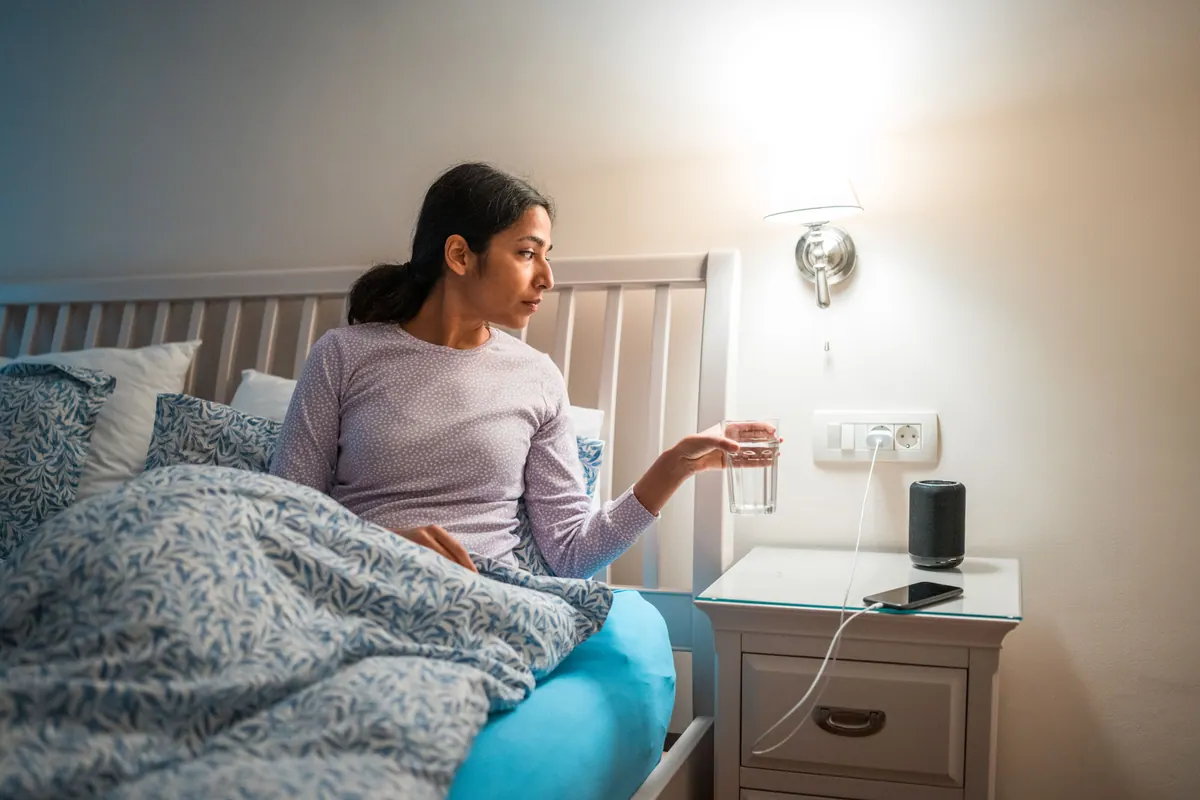
Night sweats are episodes of heavy sweating during sleep that soak your nightclothes or sheets and are not explained by a hot room or heavy bedding. MedlinePlus explains that sweating is the body’s way of cooling itself and that it is controlled by the autonomic nervous system, the part you cannot steer. It advises contacting a provider if you often sweat during sleep, if sweating is heavy, long-lasting or unexplained, or if you are losing weight.
A useful first question is whether the sweats come in waves. A flash of heat that wakes you, leaves you soaked and then chilled points toward hormonal hot flashes. Steady clamminess through the night, or sweats with a fever, points elsewhere.
Menopause and perimenopause as a cause
In midlife the usual explanation is the transition itself. The National Institute on Aging describes night sweats as hot flashes that occur at night, and notes they may disrupt sleep. ACOG places the start of estrogen fluctuation in the 30s and 40s, so sweats can appear while periods are still fairly regular.
Hormonal sweats tend to travel with other changes: periods that shorten, lengthen or skip, daytime flashes, broken sleep, and sometimes mood changes. If yours fit that picture, our page on hot flash causes and treatment explains what is happening in the brain’s temperature center and what helps.
Other causes that need ruling out
A clinician considers other causes before settling on menopause, especially when the pattern is unusual. MedlinePlus lists overactive thyroid, infection and fever, low blood sugar, medicines, alcohol and withdrawal, anxiety and, less often, cancer among the causes of heavy sweating.
| Possible cause | Clues that point to it | Usual next step |
|---|---|---|
| Overactive thyroid | A rapid, pounding heartbeat or weight loss alongside the sweats | TSH blood test, then free T4 if abnormal |
| Antidepressants and other medicines | Sweats began after a new medicine or dose change; sweating is a listed side effect of paroxetine, for example | Medication review with the clinician who manages it |
| Infection | Fever, cough, new pain, feeling unwell | Exam and tests guided by symptoms |
| Sleep apnea | Morning headaches, waking often, daytime sleepiness, insomnia, sometimes no snoring at all | Sleep evaluation by referral |
| Low blood sugar | Diabetes treatment in the background | Blood sugar testing |
| Alcohol or sedative withdrawal | Sweats after cutting back | Medical guidance before changing use |
Medicines deserve a careful look. MedlinePlus’s paroxetine page lists sweating among the side effects of that antidepressant, and the sweating page also names thyroid hormone, morphine, drugs that bring down a fever and psychiatric medicines. Never stop a medicine to test the theory; talk to the clinician who manages it first.
Sleep apnea is easy to miss in women. The National Heart, Lung, and Blood Institute says women’s risk rises during and after menopause, partly because of hormone changes and weight gain around the neck, and that menopause-related insomnia, headaches and fatigue can make apnea harder to recognize. In women the clues are often quieter: morning headaches, insomnia, anxiety, low mood and frequent waking, sometimes with no snoring at all.
Red flags that need prompt medical review
Hormonal sweats are miserable but not dangerous. Some combinations, though, call for a visit soon rather than at a routine appointment:
- Fever with the sweats, or sweats that began with an illness that has not settled
- Weight loss you did not intend
- Swollen lymph nodes in the neck, armpit or groin that do not get smaller after several weeks, keep growing, or feel hard, irregular or fixed in place, which MedlinePlus flags for a provider visit, especially alongside fever, night sweats or weight loss
- A cough that will not clear, or new pain in one area
Call 911 if sweating comes with chest pain or pressure, shortness of breath or fainting.
How night sweats are evaluated
Evaluation starts with the story: when the sweats began, how often, what your periods are doing, every medicine and supplement you take, alcohol use, and whether anyone has noticed snoring or pauses in your breathing. An exam checks the thyroid, lymph nodes and general health.
Blood tests come next when the picture is not clear-cut. The American Thyroid Association calls TSH the first test to run when checking thyroid function, with free T4 showing how much active hormone is available. It also advises stopping biotin, a common supplement, for 2 days before a thyroid blood draw, since it can make results look abnormal. A blood count and blood sugar are common additions, and a sleep study is arranged by referral when apnea is suspected. A two-week log helps more than most single tests: note the time of each episode, whether you woke hot or were already damp, alcohol or a late meal the evening before, the room temperature and any fever. That record often separates a hormonal pattern from a steady medical cause. If tiredness is your other main complaint, our page on menopause fatigue causes worth testing maps that workup.
Treatment depends on the cause
Treating the cause is what stops the sweats. A thyroid problem, a medicine side effect or an infection each has its own fix, managed by the clinician who treats that condition. When a medicine is the likely culprit, the clinician who manages it may be able to adjust the dose or switch to an alternative, and that decision belongs with them.
When the sweats are hormonal, the options are those for hot flashes. At our clinic these include estradiol therapy, with progesterone added for women who have a uterus, and non-hormonal medicines when hormones are not right for you, along with sleep guidance. Some women whose symptoms are mostly at night ask about a bedtime medicine; our page on gabapentin for night sweats explains that off-label option and its drowsiness.
How we look into night sweats at our clinic
We treat night sweats as a symptom to explain before we treat it. On the free ten-minute call, have your medicine list ready and tell us whether the sweats come in waves or as constant dampness. Your provider will review your cycle pattern and history, and labs such as TSH, a blood count and blood sugar can be taken the same day at San Gabriel or Downey, with results usually back in 24 to 48 hours.
If the evidence points to menopause, your provider talks through hormonal and non-hormonal options described on our menopause treatment page. If it points elsewhere, such as a sleep disorder or infection, we refer you to the right clinician rather than treating around it. If you cannot tell which pattern fits you, the symptom assessment is a quick way to organize what you have noticed, and our conditions library covers related symptoms. To get it looked at, book a consultation.
