Condition · Menopause care
Menopause Insomnia: Why You Wake at 3 AM and What Helps
Short answer
Menopause insomnia is usually trouble staying asleep: waking at 2 or 3 a.m. and not drifting off again. It has separate drivers, including night sweats, changing estradiol, anxiety or low mood, and sleep apnea, which becomes more common after menopause. CBT for insomnia is the first-line treatment, hormone therapy helps when sweats wake you, and apnea needs its own testing.
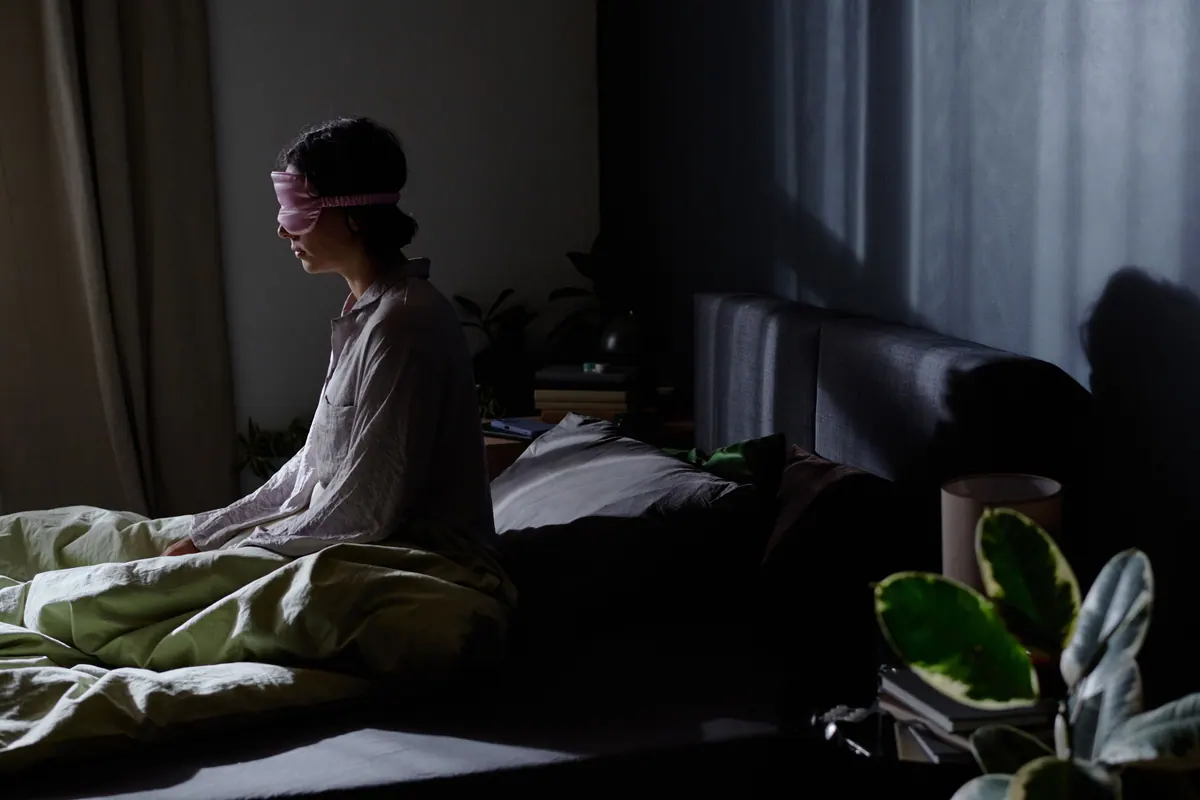
What menopause insomnia usually looks like
For most women in the transition, the problem is not getting to sleep but staying there. You fall asleep, then wake at 2 or 3 a.m., hot or wired or both, and lie awake until the alarm. The National Institute on Aging describes the same pattern: night sweats or a need to urinate wake you, and then going back to sleep is hard.
The SWAN cohort put numbers on the trend. In an analysis of 3,045 women followed from baseline through 7 annual assessments, the odds of difficulty falling asleep and difficulty staying asleep rose as women moved through the menopause transition. Early-morning awakening followed a different course, becoming less common from late perimenopause into postmenopause. More frequent hot flashes went with more of every type of sleep problem.
Four separate drivers of 3 a.m. waking
Night waking in midlife rarely has one cause, and the fix depends on which drivers are yours:
| Driver | What it feels like | What it tends to respond to |
|---|---|---|
| Night sweats | Waking hot, damp or flushed, sometimes then chilled | Treating the flashes: hormone therapy or non-hormonal medicines |
| Hormone shifts | Light, broken sleep even without sweats | Estrogen or nightly micronized progesterone, if appropriate for you |
| Anxiety or low mood | Racing thoughts on waking, early waking with dread | Therapy, CBT for insomnia, treatment of the mood disorder |
| Sleep apnea | Unrefreshing sleep, morning headaches, daytime sleepiness | Sleep testing by referral, then apnea treatment |
The hormone link is not only about sweats. In SWAN, falling estradiol levels were tied to more trouble falling and staying asleep, and rising FSH to more trouble staying asleep, after other factors were considered. Women using hormones generally had lower odds of disturbed sleep than those who were not, and the study found racial and ethnic differences in staying asleep and in early waking, so your own pattern may not match a friend’s.
Mood runs both ways. The National Institute on Aging notes that depression in particular can contribute to poor sleep, and that poor sleep can leave you irritable, low and forgetful. Our page on menopause anxiety covers the dread-on-waking pattern, and the page on menopause brain fog explains how lost sleep feeds memory complaints.
Why sleep apnea gets mistaken for menopause insomnia
Sleep apnea, where breathing stops and restarts during sleep, becomes more likely after menopause. The National Heart, Lung, and Blood Institute ties the rise in women’s risk during and after menopause to shifting hormones and to weight that settles around the neck. It also points out that women more often have insomnia, morning headaches, tiredness, anxiety and frequent waking than the loud snoring people associate with apnea.
That overlap is the trap. Because menopause itself causes insomnia, headaches and fatigue, NHLBI notes that apnea can be harder for you or a clinician to recognize. If a bed partner has noticed pauses or gasping, or you wake unrefreshed despite enough hours in bed, a sleep evaluation belongs on the list before you assume hormones explain it all.
What CBT for insomnia involves, and why it comes first
Cognitive behavioral therapy for insomnia (CBT-I) is the treatment sleep specialists recommend first. The American Academy of Sleep Medicine guideline gives multicomponent CBT-I a strong recommendation for chronic insomnia in adults, its highest grade. CBT-I combines education about sleep regulation with cognitive strategies, stimulus control and sleep restriction:
- Stimulus control: go to bed only when sleepy, get out of bed when you cannot sleep, use the bed only for sleep and sex, and keep a fixed wake time.
- Sleep restriction: limit time in bed to roughly the sleep you are actually getting, based on a diary, then widen it as sleep consolidates.
- Relaxation training, which the guideline also supports as a single technique.
Good sleep habits alone are not enough. The same guideline advises against using sleep hygiene as a stand-alone treatment, though the National Institute on Aging’s habits (a regular schedule, a cool quiet room, no late caffeine, and remembering that alcohol makes it harder to stay asleep) still make a useful foundation. The institute also notes that CBT-I has helped women with menopausal symptoms sleep better.
Where hormone therapy and nightly progesterone fit
Hormone therapy helps most clearly when night sweats are the alarm clock. The Menopause Society’s hormone therapy guidance from 2022 finds that low-dose estrogen or a progestogen may improve chronic insomnia in menopausal women, with 14 of 23 reviewed studies showing positive results, and some evidence that estradiol through the skin may help perimenopausal sleep even apart from flashes.
Oral micronized progesterone has a mildly sedating effect without dulling daytime thinking, the statement says, which is why it is taken at night. A meta-analysis it cites found that progesterone shortened the time to fall asleep but did not lengthen total sleep. Whether either is right for you depends on your history, including clots, stroke and breast cancer, which is what a consultation reviews.
Melatonin, sleeping pills and other quick fixes
Short-term aids have a limited role. The National Institute on Aging says sleep medicines may help when used for a short time but are not a long-term answer for insomnia. On melatonin, NCCIH reports that guidelines from the American Academy of Sleep Medicine and the American College of Physicians found too little strong evidence to recommend it for chronic insomnia.
Magnesium has even less behind it. NCCIH’s review of complementary sleep approaches calls the research very limited and warns against supplement doses above 350 mg a day for adults unless a clinician advises it.
How our clinic works on menopause sleep problems
We start by working out which of the four drivers you have, because treating the wrong one wastes months. Before the free ten-minute call, keep a week of notes: when you wake, whether you were hot or sweating, what your mind was doing, and whether anyone has noticed snoring or gasping. If you are still unsure whether this is the transition at all, our page on how you know you are in menopause helps place your stage.
In the consultation, whether at San Gabriel, at Downey or on video, your provider reviews your history and labs and discusses options from our programs, which include systemic hormone therapy, nightly or cyclic progesterone, non-hormonal support for sleep and mood, and sleep guidance. Apnea testing and formal CBT-I are arranged by referral. Our menopause care program outlines the full plan, the symptom assessment helps if you cannot tell which driver is yours, and our conditions library covers the symptoms that travel with poor sleep. To start, book a consultation.
