Condition · Menopause care
Hot Flashes: Causes, Triggers and Treatments That Work
Short answer
A hot flash is a sudden wave of heat, usually over the face, neck and chest, that can bring flushing, sweating and then chills. In menopause it starts in the brain's temperature center as estrogen falls. Hormone therapy relieves flashes more than any other option, several non-hormonal medicines and CBT also help, and thyroid disease, infection or medicines can cause similar episodes.
How a flash starts, peaks and fades
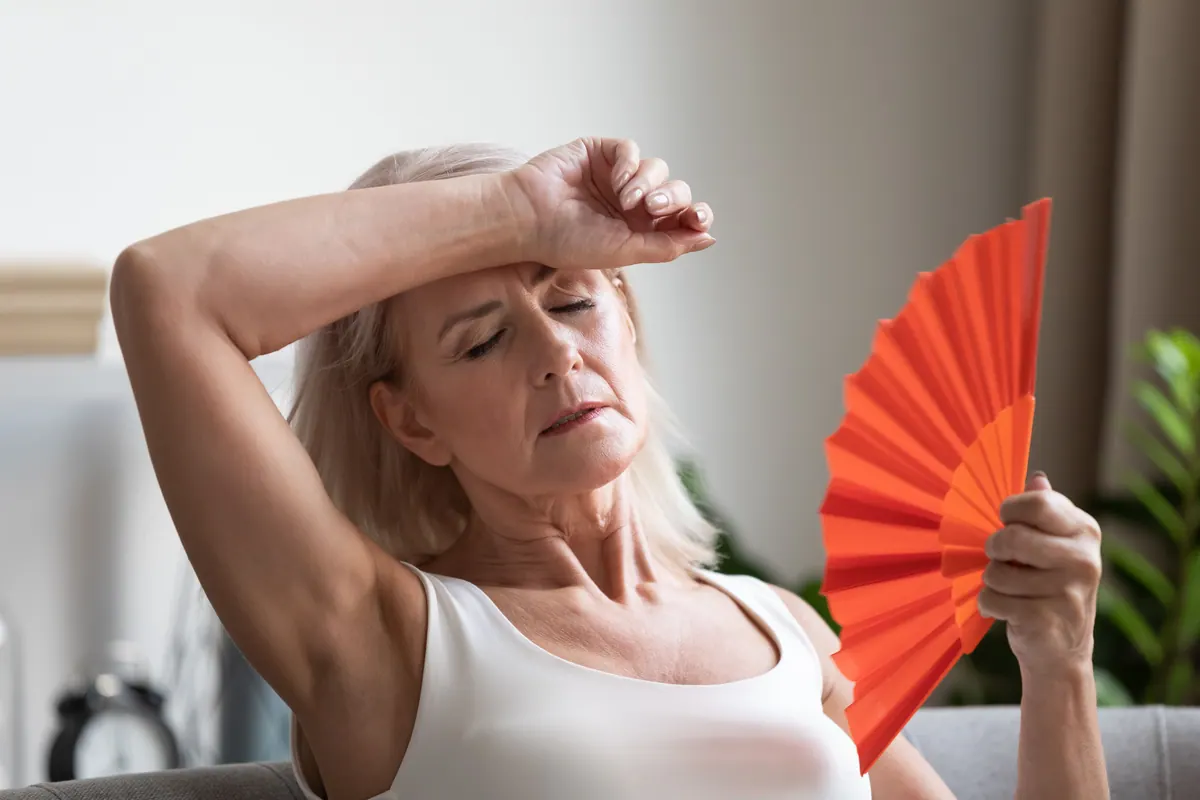
A hot flash arrives as a sudden feeling of heat, most often in the upper body and face, as the National Institute on Aging describes it. Your face and neck may flush, red blotches can appear on the chest, back and arms, and heavy sweating and then cold shivering can follow. Most last between 30 seconds and 10 minutes, and they can come several times an hour or only once or twice a week.
When they happen during sleep they are called night sweats. ACOG notes that night flashes can wake you and leave you tired and sluggish the next day. Flashes, also called vasomotor symptoms, are among the most common symptoms of the transition; the 2023 nonhormone statement from The Menopause Society puts them at up to 80% of menopausal women.
What is happening in the brain’s thermostat
The trigger sits in the hypothalamus, the brain’s temperature control center. The Menopause Society statement describes a cluster of nerve cells, called KNDy neurons for the three messengers they release (kisspeptin, neurokinin B and dynorphin), that sit next to the thermoregulatory center. As estradiol falls across the transition, these neurons become overactive and release too much neurokinin B onto that center, which disrupts temperature control and sets off a flash.
The practical effect is a narrowed comfort zone. The same statement notes that small rises in core body temperature can trigger flashes, which is why a warm room, a hot drink or a layered outfit can tip you over. This mechanism is also why newer non-hormonal medicines that block neurokinin signaling work: they target the cause directly rather than the symptoms downstream.
Personal triggers and what avoiding them does
Women are often told to avoid alcohol, caffeine, spicy foods and hot drinks. The National Institute on Aging’s hot flash page suggests exactly that, along with dressing in layers, carrying a fan, keeping the bedroom cool, quitting smoking and keeping a healthy weight. It also suggests noting what sets off your flashes and how much they bother you.
The evidence for trigger avoidance as treatment is thin. The 2023 statement found no clinical trials of avoiding triggers and rated it “not recommended” as a treatment, and the same for cooling techniques, exercise and yoga for flashes specifically. That does not make these steps useless: they cost little and can make individual flashes easier.
One caution when judging any remedy: placebo response in hot flash trials is large. The 2023 statement notes placebo improvement rates of 20% to 66% in trials of non-hormonal treatments, with higher responses in women who have more anxiety, which is why a friend’s experience with a product is hard to interpret. The one lifestyle change the statement did recommend, at a lower level of evidence, is weight loss for women carrying extra weight, with the clearest effect earlier in the transition.
When the cause is not menopause
Flushing and sweating have many causes, and a clinician thinks about them before labelling every episode as menopause. MedlinePlus lists causes of heavy sweating that include:
- An overactive thyroid
- Fever and infection
- Low blood sugar (hypoglycemia)
- Medicines, including thyroid hormone, morphine, fever reducers and medicines for mental health conditions
- Alcohol, caffeine and spicy foods, plus withdrawal from alcohol, sedatives or narcotic painkillers
- Anxiety and emotional stress, and less often cancer
MedlinePlus advises contacting a provider when sweating comes with fever, weight loss, a rapid pounding heartbeat, shortness of breath or chest pain, since those can point to an overactive thyroid or infection. Evaluation usually means a history of the pattern and your periods, a medication review, and labs such as thyroid tests and a blood count when the story does not fit. Flashes that arrive with a sense of dread or panic deserve their own look; our page on anxiety in menopause explains how the two overlap.
The treatment ladder, and what our clinic offers
Hormone therapy has the strongest effect. The 2022 hormone therapy statement reports that estrogen alone or with a progestogen cut weekly flash frequency by 75% compared with placebo, with no other medicine or alternative therapy found to give more relief. Lower doses may take 6 to 8 weeks to give adequate relief, the statement adds, so it is worth giving a new dose time before judging it. For women who cannot or prefer not to use hormones, the 2023 statement ranks the non-hormonal options:
| Option | What the 2023 statement says | At our clinic |
|---|---|---|
| Estradiol patch, gel or pill, plus progesterone with a uterus | Not covered by this statement; the 2022 statement favors it for most healthy women under 60 or within 10 years of menopause | Offered after review |
| SSRIs and SNRIs, including paroxetine 7.5 mg | Recommended, Level I; mild to moderate benefit | Non-hormonal options are part of our program; your clinician decides which, if any |
| Gabapentin | Recommended, Level I; an off-label use | Ask your clinician whether it fits you |
| Fezolinetant (Veozah) | Recommended, Level I; liver monitoring required | Ask your clinician whether it fits you |
| Oxybutynin | Recommended, Levels I to II; dry mouth, cognition concerns in older women | Ask your clinician whether it fits you |
| Cognitive behavioral therapy and clinical hypnosis | Recommended, Level I | By referral |
| Supplements, cooling, yoga, paced breathing | Not recommended | Not offered as treatment |
Elinzanetant (Lynkuet), a newer bedtime pill, was approved after this statement was written; our page on how elinzanetant works covers its label, and our ranked guide to non-hormonal hot flash treatments compares every option in more depth.
When a flash needs urgent care
A typical hot flash is uncomfortable, not dangerous. Some symptoms that feel like one are not.
Call 911 for chest pain or pressure, shortness of breath, fainting, sudden weakness or numbness on one side, face droop, trouble speaking, or a sudden severe headache, even if they began with sweating or flushing.
How we treat hot flashes at our clinic
Treatment here starts with sorting out which kind of flash you have. During the free ten-minute call, expect questions about how often they come, whether they wake you, what your periods are doing, and which medicines you take. Your provider then reviews your personal and family history, including breast cancer, clots, stroke and heart disease, because that history decides whether estradiol is on the table or a non-hormonal route is the better fit.
Any labs need a short in-person visit to San Gabriel or Downey; the consultation can happen there or by video. If hormones suit you, your provider may suggest estradiol through the skin or by mouth, paired with progesterone when you still have a uterus; if they do not, your provider discusses non-hormonal medicines and sleep and weight support. Our menopause care page sets out the full program, and our comparison of Veozah and hormone therapy helps if you are weighing the two. Not sure what is driving your symptoms? Start with the symptom assessment, or browse our conditions library. When you are ready, book a consultation.
