Answer · Preventative labs
Does Biotin Affect Thyroid Tests? How Long to Stop It
Short answer
Yes. Biotin, found in many hair, skin and nail supplements, can make some thyroid blood tests read falsely high or falsely low, and the FDA has warned about this since 2017. The Synthroid label and the American Thyroid Association both advise stopping biotin for at least 2 days before a thyroid blood draw. Tell whoever orders your labs about every supplement you take.
Can biotin really change a thyroid result?
Yes, enough to change a diagnosis. In its October 2020 guidance to test makers, the FDA explains that biotin levels above the usual daily intake can cause falsely high or falsely low results depending on how a test is built, and that incorrect results may lead to misdiagnosis or the wrong treatment. The agency first issued safety communications about it on 28 November 2017 and again on 5 November 2019.
For thyroid testing specifically, the American Thyroid Association says biotin can make several thyroid function tests look abnormal when the levels in your blood are in fact normal. The ATA describes hyperthyroidism as a low TSH with a raised free T4, and that is the picture biotin can imitate.
Why does a vitamin interfere with a blood test?
Many lab tests use biotin as part of their chemistry. The Synthroid label explains that thyroid immunoassays built on a biotin and streptavidin interaction can give erroneous results when a patient takes biotin supplements, because the extra biotin in the sample gets in the way of that binding step.
How much it matters was measured in a small 2017 study published in JAMA. Six healthy adults took 10 mg of biotin a day for 7 days, a dose the authors describe as common in over-the-counter supplements, and 37 immunoassays were run on four lab systems:
| What was tested | Result |
|---|---|
| Assays that use biotin and streptavidin | 9 of 23 showed interference |
| Assays that do not use biotin | 0 of 14 showed interference |
| Biotin-based competitive assays | 5 of 8 read falsely high |
| Biotin-based sandwich assays | 4 of 15 read falsely low |
The tests checked included TSH, free T4, free T3 and total T4 and T3. Whether your result is affected depends on the specific assay your lab runs, which is why one lab may see a problem and another may not.
How long before a blood draw should biotin be paused?
At least 2 days. The Synthroid label instructs patients to stop biotin and any biotin-containing supplement for at least 2 days before TSH or T4 testing, and the ATA’s page on thyroid function tests gives the same 2-day window.
The FDA guidance describes biotin as a water-soluble vitamin, and in the 2016 case report results corrected quickly once it stopped, both of which fit a short pause doing the job. Plan the pause around the draw, not the appointment. If your blood is taken on a Thursday morning, the last biotin dose would be no later than Monday night. Restarting afterward is a question for the person who suggested the supplement, not for the lab. On the day, tell the person drawing your blood that you paused biotin and when, so it can be noted with the sample.
Which products carry enough biotin to matter?
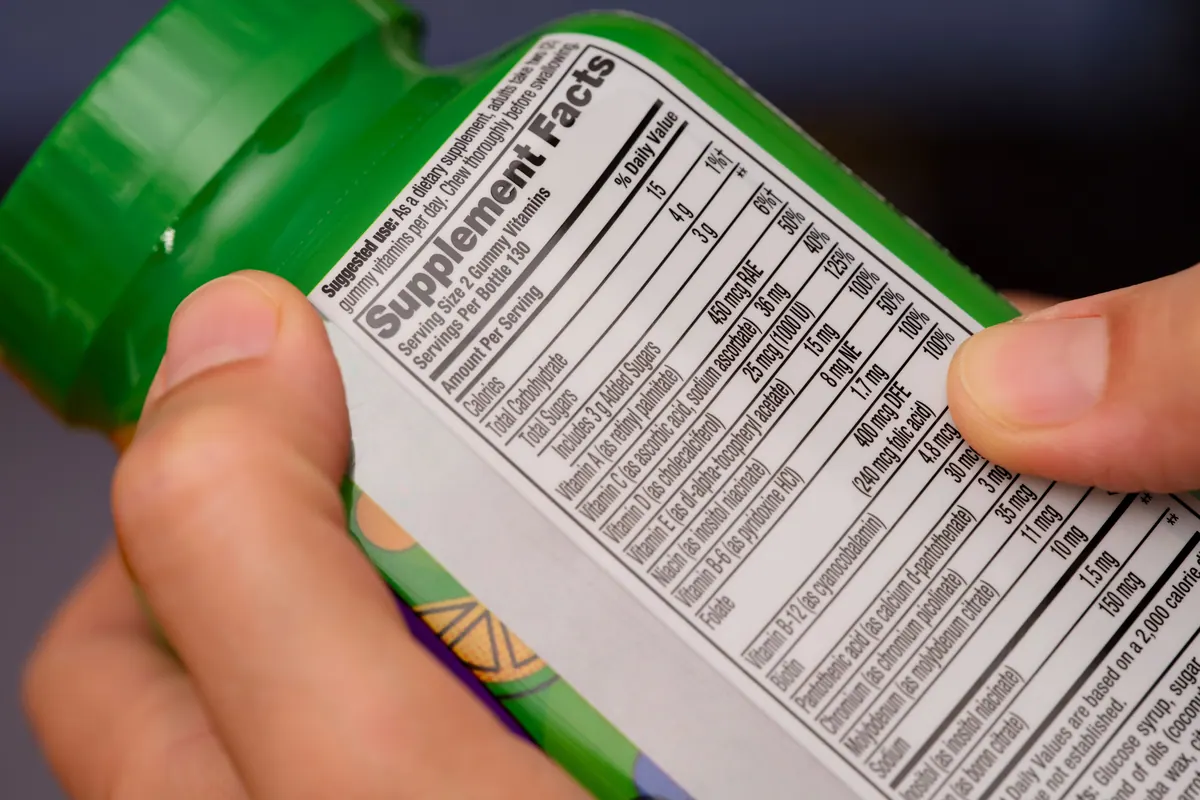
The dose is what counts. The FDA guidance notes that biotin appears in multivitamins, prenatal vitamins and supplements marketed for hair, skin and nail growth. Test makers historically checked their assays at the usual recommended intake of 30 micrograms a day, but the FDA has seen interference from supplement doses well above that, and has observed doses as high as 300 mg a day.
Compare the label on your bottle with those numbers. The JAMA study used 10 mg, which is 10,000 micrograms, against a usual daily amount of 30 micrograms, and the FDA singles out supplements marketed for hair, skin and nails. MedlinePlus adds that there is no good scientific evidence that biotin helps hair loss or brittle nails, which may make the pause an easy decision.
What if your results already look off?
Look at whether they fit how you feel. A 2016 report titled Factitious Graves’ Disease Due to Biotin Immunoassay Interference described a patient whose markedly abnormal thyroid tests did not match the clinical picture. After biotin was stopped, the results returned to normal far faster than the half-life of T4 would allow, which is the tell-tale sign that the test, not the thyroid, was misbehaving.
If your numbers suggest an overactive thyroid but you have none of the symptoms, mention any biotin you took before treatment is discussed. The reverse also holds. A reassuring result drawn while you were on high-dose biotin is not proof that all is well, because the JAMA study found falsely low readings in some assays as well as falsely high ones. Our guide to what free T4 and free T3 results mean explains the patterns a clinician looks for.
Who needs extra care with this advice?
- Women taking high-dose biotin for a diagnosed condition. The 2016 report notes that very high doses, around 10,000 times the daily intake, have been studied in progressive multiple sclerosis. If a clinician recommended biotin for a medical reason, ask that clinician before pausing it.
- Anyone who could need an emergency heart test. The FDA keeps a list of troponin assays that have not addressed biotin interference and says it continues to receive reports of falsely low troponin results caused by biotin.
- Women on prenatal vitamins. These are among the products the FDA lists, so read the biotin amount before any thyroid draw in pregnancy.
Call 911 for chest pain or pressure, trouble breathing or a faint, whatever supplements you take. Tell the emergency team that you take biotin, because a falsely low troponin could mislead them.
How we time your lab draw around supplements
Our clinic asks for your full supplement list before scheduling labs, so a biotin pause can be planned and the draw is usable on the first try. Blood is drawn at the visit itself, results are typically back within 24 to 48 hours for a provider to review with you line by line. The thyroid section of our women’s preventative lab panel measures four things, namely TSH, free T4, free T3 and antibodies, and the panel is FSA and HSA eligible.
If a repeat test turns out to be needed, our page on thyroid test costs without insurance explains what drives the bill. Unsure which tests fit your symptoms? Try the short health assessment, read more women’s health answers, or use the free ten-minute phone call to ask questions first, then book a consultation.
