Answer · Preventative labs
Calcium and Vitamin D After Menopause: How Much You Need
Short answer
Women 51 and older need 1,200 mg of calcium a day from food and supplements combined. Vitamin D needs are 600 IU a day to age 70 and 800 IU after, and the Bone Health and Osteoporosis Foundation suggests 800 to 1,000 IU from age 50. Food comes first. Limits are 2,000 mg of calcium and 4,000 IU of vitamin D, and a blood test is not needed for everyone.
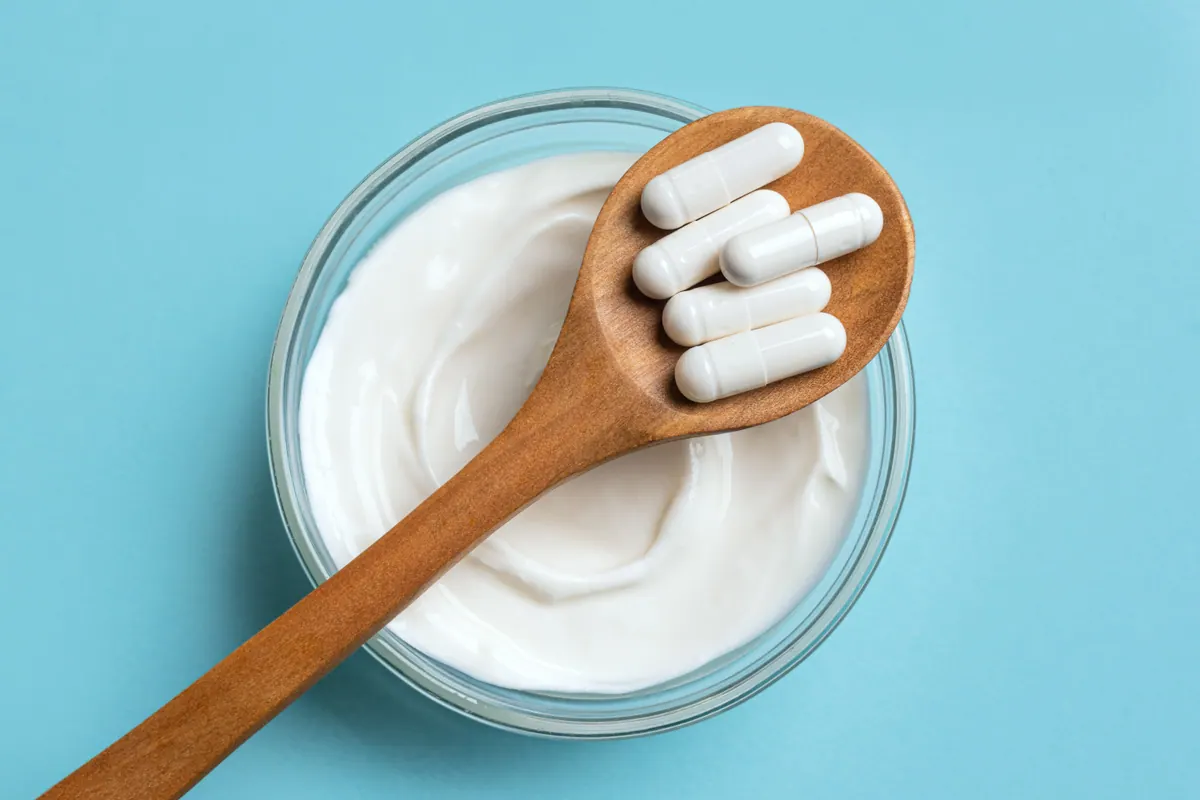
How much calcium and vitamin D do women need after menopause?
The numbers rise at 51 for calcium and at 71 for vitamin D. MedlinePlus gives the Recommended Dietary Allowances set by the National Academies:
| Age | Calcium per day | Vitamin D per day |
|---|---|---|
| 19 to 50 | 1,000 mg | 600 IU (15 mcg) |
| 51 to 70 | 1,200 mg | 600 IU (15 mcg) |
| Over 70 | 1,200 mg | 800 IU (20 mcg) |
The calcium figure counts everything: food, drinks and supplements together. For vitamin D, the Bone Health and Osteoporosis Foundation (BHOF) recommends a higher range of 800 to 1,000 IU a day from age 50, and MedlinePlus’s vitamin D page notes that recommendation and suggests asking your provider which amount suits you.
Is food better than a supplement?
Food is the preferred source of calcium, according to both MedlinePlus and BHOF, and many women can reach 1,200 mg without pills. Dairy is the easiest route, but it is not the only one. These figures come from BHOF’s calcium food guide:
| Food | Serving | Approximate calcium |
|---|---|---|
| Plain low-fat yogurt | 6 oz | 310 mg |
| Milk (skim, low-fat or whole) | 8 oz | 300 mg |
| Fortified plant milk or orange juice | 8 oz | 300 mg |
| Sardines, canned with bones | 3 oz | 325 mg |
| Collard greens, frozen | 8 oz | 360 mg |
| Tofu prepared with calcium | 4 oz | 205 mg |
| Cheddar cheese | 1 oz | 205 mg |
| Canned salmon with bones | 3 oz | 180 mg |
Vitamin D is different. MedlinePlus explains that very few foods contain it naturally, so many are fortified; fatty fish such as salmon, tuna and mackerel are among the richest sources. The skin also makes vitamin D in sunlight, but the amount varies widely from person to person, and sunscreen and covered skin reduce it. That is why vitamin D supplements are more common than calcium ones.
A simple approach: add up your usual daily calcium from food, then supplement only the gap. Our menopause diet guide shows how calcium foods fit into a full day of meals.
How should you take a calcium supplement?
In small doses, and matched to the type. MedlinePlus and BHOF agree on the practical rules:
- Split the dose. Your body absorbs it most efficiently at about 500 mg at a time or less (BHOF says 500 to 600 mg).
- Match the type to meals. Calcium carbonate costs less and absorbs better with food. Calcium citrate costs more but absorbs well with or without food.
- Read the label for elemental calcium. Antacid chews made with calcium carbonate usually provide 200 to 400 mg each, according to MedlinePlus.
- Start low if your stomach complains. BHOF suggests starting with a smaller amount when you begin or switch supplements.
How much is too much?
There are upper limits for both, and supplements are the usual way people exceed them. MedlinePlus puts the safe upper intake of calcium at 2,000 mg a day for adults over 50 and of vitamin D at 4,000 IU a day for adults. BHOF cites the same 4,000 IU limit.
Kidney stones
This is the clearest documented harm of supplements. MedlinePlus notes that high calcium intake over a long period raises kidney stone risk in some people. The USPSTF reports that in the Women’s Health Initiative trial of 1,000 mg of calcium plus 400 IU of vitamin D daily, one extra woman was diagnosed with a urinary tract stone for every 273 women supplemented over 7 years. It judged that harm small.
Vitamin D toxicity
MedlinePlus says vitamin D toxicity almost always comes from taking too many supplements. Too much vitamin D raises blood calcium, which can cause kidney damage, kidney stones, confusion, nausea, vomiting, constipation, weakness and weight loss.
Heart questions
Women often ask whether calcium or vitamin D pills affect the heart. The USPSTF found a few studies of vitamin D alone that suggested no increase in cardiovascular disease. For calcium, the safest approach is to meet most of your need from food and keep supplements to the gap. If heart health is on your mind, our page on cholesterol after menopause covers the numbers that matter more.
Do supplements prevent fractures?
At low doses in women without deficiency, apparently not. The USPSTF’s 2018 recommendation advises against daily supplements of 400 IU or less of vitamin D and 1,000 mg or less of calcium for preventing fractures in postmenopausal women living in the community, a grade D. It found the evidence insufficient for higher doses. The WHI trial of 36,282 women on that combination showed no significant reduction in any fracture outcome.
That recommendation is being updated; the task force’s own page notes an update in progress. It covers healthy women taking pills to prevent fractures. It does not apply to women with osteoporosis, vitamin D deficiency or a clinician’s specific advice, and it does not change the dietary targets above.
When is a vitamin D blood test worth it?
When there is a reason, not as a routine screen. MedlinePlus says routine vitamin D testing is not recommended for everyone. A test makes sense if you have:
- Low bone density, osteopenia or osteoporosis
- Bone pain, muscle weakness or aches, or fractures from minor falls
- Little sun exposure, because you stay indoors, cover up or always use sunscreen
- Weight loss surgery or a condition that affects absorption, such as Crohn’s disease, ulcerative colitis or celiac disease
- Kidney or liver disease, or medicines that affect vitamin D
BHOF notes that a healthy 25-hydroxy vitamin D level is generally agreed by medical societies to be 30 to 60 ng/mL. Labs and methods differ, so read your result against the range on your report.
Who does this answer differ for?
- Women on thyroid medicine: the American Thyroid Association lists calcium among supplements that can block absorption of thyroid hormone, so timing matters.
- Women on warfarin: MedlinePlus advises keeping vitamin K intake steady, because sudden changes alter the drug’s effect; that matters if you consider products that add vitamin K.
- Women with kidney stones or kidney disease: supplement plans need a clinician’s input.
- Women who drink most days: alcohol affects bone and sleep, which our page on alcohol and menopause explains.
- Women after a hysterectomy or early menopause: bone loss may start earlier, so intake matters sooner; our page on menopause after a hysterectomy covers timing.
If you are unsure which of these applies to you, our quick health assessment can help.
How our women’s labs fit in
Our preventative women’s lab panel includes vitamin D and B12, along with kidney function, thyroid tests and a metabolic panel, drawn the same day at San Gabriel or Downey. A provider reviews each result with you and explains whether you need a supplement, a change in diet or nothing at all, and when to recheck.
If you take thyroid medicine, blood thinners or several supplements, bring the bottles to your visit so we can check timing and interactions. To get your levels checked, book a consultation. For related questions, browse the answers library.
