Answer · Preventative labs
Why Does Cholesterol Rise After Menopause? What to Check
Short answer
Cholesterol rises after menopause partly because of the hormonal change itself, not only because of age. In the SWAN study, total cholesterol, LDL and apolipoprotein B rose sharply within a year before and after the final period, beyond what aging explained. A standard lipid panel, plus ApoB and a one-time Lp(a) test, shows where you stand, and lifestyle changes or medicine bring numbers down.
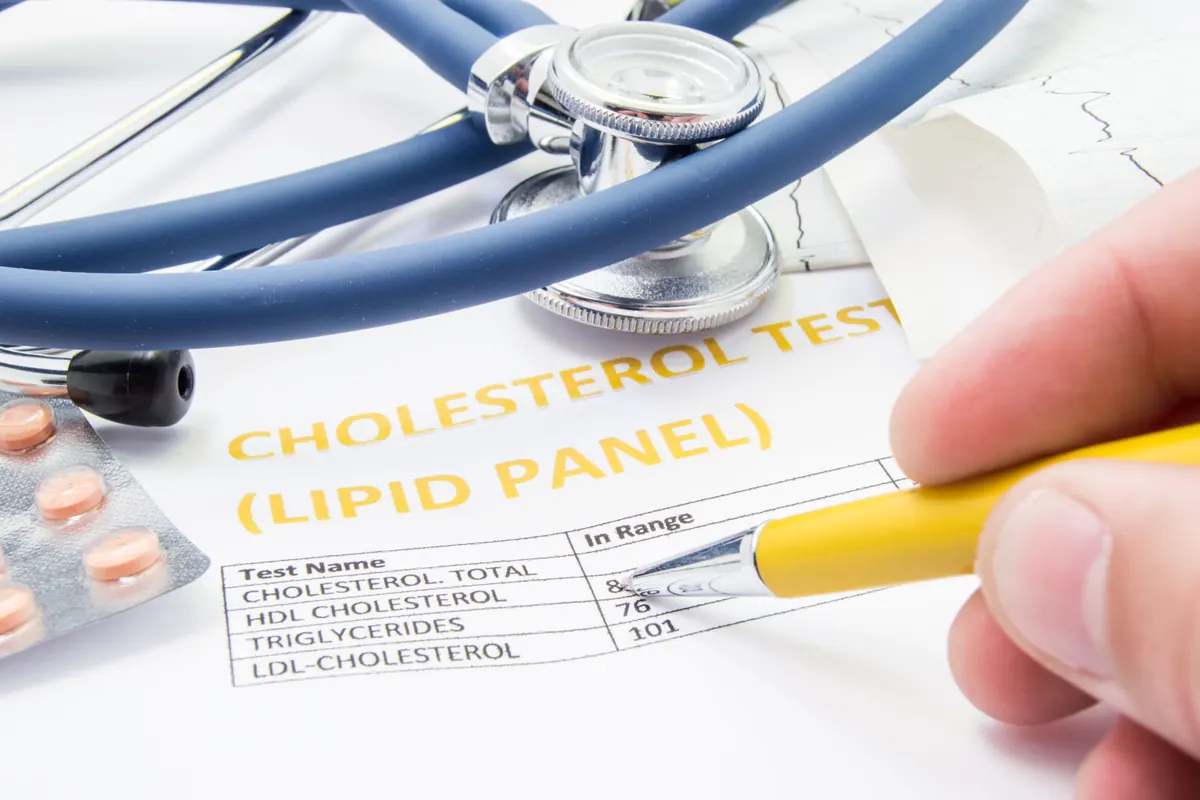
What happens to cholesterol around your final period?
It climbs in a short, sharp step rather than a slow slope. The Study of Women’s Health Across the Nation (SWAN) followed women with yearly exams, and 1,054 of them reached a natural final menstrual period during the study. Researchers then compared two patterns: a steady rise that would point to aging, and a jump timed to menopause.
The 2009 SWAN analysis in the Journal of the American College of Cardiology found that only three markers fit the menopause pattern: total cholesterol, LDL (“bad”) cholesterol and apolipoprotein B. All three rose substantially in the window from one year before to one year after the final period. Blood pressure, glucose, insulin and inflammation markers followed the straight line of aging instead.
Two details make this finding useful:
- The pattern was similar in African American, Chinese, Hispanic, Japanese and White women.
- The authors concluded that women have a unique rise in lipids at the final period and that monitoring lipids in perimenopause should help prevent heart disease.
If your periods ended with a hysterectomy, you may not know when your final period would have been, which makes the jump harder to time; our page on menopause after a hysterectomy explains how to tell where you are.
Which numbers on a lipid panel matter most?
A standard cholesterol test reports four numbers, and LDL usually drives treatment decisions. MedlinePlus gives these healthy levels for women 20 and older:
| Measure | Healthy level for women | Notes |
|---|---|---|
| Total cholesterol | Less than 200 mg/dL | The sum of all types |
| LDL cholesterol | Less than 100 mg/dL | Often “calculated” from the other numbers |
| Non-HDL cholesterol | Less than 130 mg/dL | Everything except HDL |
| HDL cholesterol | 60 mg/dL or higher is ideal | Below 50 mg/dL is low for women |
MedlinePlus also notes that high triglycerides may raise heart disease risk, especially in women. Ranges and units differ between labs, so read your own report against the range printed on it, and ask your clinician what your target should be.
What do ApoB and Lp(a) add to a standard panel?
They answer two different questions. ApoB counts the particles that carry cholesterol, while Lp(a) measures an inherited particle that a standard panel misses entirely.
Apolipoprotein B
MedlinePlus describes ApoB as a protein involved in moving cholesterol around the body and a form of LDL. It states plainly that how much the test adds to standard cholesterol testing is not known, but that the American College of Cardiology and American Heart Association recommend it to help guide treatment. A high ApoB can signal raised heart risk even when cholesterol is at its target on treatment. Because ApoB is one of the three markers that jumped at menopause in SWAN, it is a sensible number to track through the transition.
Lipoprotein(a)
The American Heart Association explains that your Lp(a) level is mostly inherited and that about 1 in 5 people worldwide have a high level, usually without symptoms. A result of 125 nmol/L (50 mg/dL) or more is considered high, and at 250 nmol/L or more risk may be about twice as high. Current guidelines recommend testing every adult at least once, and the AHA notes the test must be ordered separately. Lifestyle changes do not lower Lp(a), but managing your other risk factors lowers your overall risk.
How do oral and transdermal estrogen affect lipids differently?
Route matters, mostly for triglycerides. A pooled analysis of 248 studies covering 42 hormone regimens found:
| Effect | Estrogen by mouth | Estradiol through the skin |
|---|---|---|
| LDL and total cholesterol | Lowered (all estrogen-alone regimens) | Lowered (all estrogen-alone regimens) |
| HDL cholesterol | Raised | Raised |
| Triglycerides | Raised | Lowered |
| Lp(a) | Hormone therapy overall generally lowered it | Same overall finding; the pooled result was not split by route |
The type of progestogen also changed the picture: some blunted the HDL rise more than others, while progestogens had little effect on the drop in LDL.
The practical upshot is for women who already have high triglycerides. The Vivelle-Dot patch label warns that in women with preexisting high triglycerides, estrogen therapy may raise them further and lead to pancreatitis. That is one reason a clinician looks at your full lipid panel before choosing between a tablet and a patch or gel.
Lipid changes are a side effect to manage, not a reason to start hormones. Hormone therapy is chosen for symptoms such as hot flashes.
When do lifestyle changes or a statin come in?
Most plans start with lifestyle changes and add medicine when your overall risk calls for it. The NHLBI points to heart-healthy eating plans such as DASH, which limit saturated fat from fatty meats, full-fat dairy and desserts, along with regular activity and weight management.
On medicines, the NHLBI says:
- Statins are the most common treatment for high cholesterol and lower the risk of heart attack and stroke in people with high LDL.
- They usually do not cause side effects, but they may raise the risk of diabetes, mainly in people already at high risk.
- Ezetimibe, bempedoic acid and PCSK9 inhibitors are options when statins are not tolerated or not enough.
Whether you need one depends on your whole risk picture: age, blood pressure, blood sugar, smoking, family history and the lipid numbers themselves. Habits count as well. Cutting back on drinking is part of most heart-healthy plans, and our page on alcohol and menopause covers what it does to symptoms and sleep. If you are not sure which of these factors apply to you, our online assessment is a quick way to sort them out.
How often should cholesterol be retested?
More often as you get older. MedlinePlus recommends testing every 5 years for younger adults, every 1 to 2 years for women 55 to 65, and every year after 65. Women with high blood pressure, type 2 diabetes, smoking, excess weight, inactivity, a high saturated fat diet or a family history of heart disease may need it more often.
Fasting rules vary. MedlinePlus notes you may need to fast for 9 to 12 hours, and that your provider will tell you whether you do. Lp(a) is different: the AHA notes the level is mostly inherited, so a single test usually tells you what you need to know.
How our women’s labs track cholesterol through menopause
Our clinic’s preventative women’s lab panel includes a full lipid panel with ApoB and Lp(a), alongside A1c, fasting glucose and insulin, thyroid tests, kidney and liver function. The draw happens the same day at San Gabriel or Downey, results come back in 24 to 48 hours, and a provider goes through each number with you.
If your numbers have shifted, the provider explains what changed and why, how your hormone therapy route might matter, and what to do next, whether that is a diet and activity plan, a recheck in a year, or a conversation with your primary care clinician about medicine.
When you want your numbers checked, book a consultation. For more on midlife health questions, see our answers library.
