Patient guide · Menopause care
Menopause Diet: Protein, Calcium, Fiber and What to Limit
Short answer
A menopause diet rests on a few priorities: protein at every meal (the 2025 to 2030 Dietary Guidelines suggest 1.2 to 1.6 grams per kilogram of body weight a day), calcium of 1,200 mg after 50 and vitamin D from food first, plenty of fiber from plants, a Mediterranean-style pattern, and less alcohol, added sugar and processed food. Crash diets cost muscle.
Who is this guide for?
This guide is for women in perimenopause or past menopause who want a practical eating pattern for the years when muscle, bone and heart risk all shift. It suits most healthy women. If you have kidney disease, diabetes on insulin, a past eating disorder, food allergies or celiac disease, or you take warfarin, have a clinician or dietitian adapt it, because some targets here would need to change.
It is not a weight-loss diet, and it sets no goal weight. The aim is to give your body what it needs for strength and long-term health.
The five-step plan
Each step below rests on a federal guideline or a specialist body’s advice, and together they make a pattern you can keep for years rather than a short program.
Step 1: Put protein at every meal
Protein deserves more attention in midlife. The new Dietary Guidelines for Americans, 2025-2030 tell everyone to prioritize protein foods at every meal and set a goal of 1.2 to 1.6 grams of protein per kilogram of body weight per day, adjusted to your calorie needs. For a woman who weighs 70 kg (about 154 pounds), that works out to roughly 84 to 112 grams a day.
The guidelines also say that some older adults need fewer calories but equal or greater amounts of protein, vitamin B12, vitamin D and calcium. Spreading protein across breakfast, lunch and dinner is easier than trying to fit it into one meal.
Good sources, drawn from the guidelines and the National Institute on Aging’s meal planning tips:
- Fish and seafood, poultry, eggs and lean meat
- Dairy such as yogurt, milk and cheese
- Beans, peas, lentils, nuts and seeds
- Soy foods such as tofu, tempeh and edamame
Step 2: Get calcium and vitamin D from food first
Bone loss speeds up around the final period, so calcium needs rise. The Bone Health and Osteoporosis Foundation (BHOF) recommends 1,000 mg of calcium a day for women 50 and younger and 1,200 mg for women 51 and older, counting food and supplements together. For vitamin D it suggests 800 to 1,000 IU a day from age 50.
Dairy is the simplest calcium source, and the Dietary Guidelines set a goal of 3 dairy servings a day on a 2,000-calorie pattern. If you do not eat dairy, BHOF lists fortified plant milks and juices, tofu prepared with calcium, canned sardines or salmon with the bones, and greens such as collards, kale and bok choy as useful sources. Vitamin D is harder to get from food, which is why some women need a supplement. Our page on calcium and vitamin D after menopause covers supplements, upper limits and when a blood test makes sense, and our page on bone loss after menopause explains why the timing matters.
Step 3: Build meals around plants and fiber
Fiber comes from the parts of a meal many women eat too little of: vegetables, fruit, whole grains, beans and nuts. The Dietary Guidelines set goals of 3 servings of vegetables and 2 of fruit a day on a 2,000-calorie pattern, and 2 to 4 servings of whole grains, while sharply cutting refined carbohydrates such as white bread, packaged breakfast foods and crackers. They also note that fiber-rich foods and fermented foods such as yogurt, kefir, sauerkraut and kimchi support a healthy gut.
A Mediterranean-style pattern puts these pieces together. The American Heart Association describes it as plenty of vegetables, fruit, whole grains, beans, nuts and seeds, olive oil as the main fat, fish and poultry more often than red meat, and fruit in place of sweets. The AHA says this style of eating can help meet its recommendations and reduce risk factors such as high cholesterol, high blood pressure and diabetes.
Step 4: Cut back on alcohol, added sugar and highly processed food
These three crowd out the foods that help. The Dietary Guidelines say:
| Limit | What the 2025-2030 guidelines say |
|---|---|
| Alcohol | Consume less alcohol for better overall health |
| Added sugar | No amount is recommended; keep any one meal to 10 grams or less |
| Sugary drinks | Avoid sodas, fruit drinks and energy drinks |
| Highly processed foods | Avoid salty or sweet packaged foods such as chips, cookies and candy |
| Saturated fat | Generally no more than 10% of daily calories |
| Sodium | Less than 2,300 mg a day for most people |
Alcohol is worth a closer look in menopause, and our page on alcohol and menopause covers what it does to hot flashes, sleep and bone.
Step 5: Avoid crash diets
Rapid, steep calorie cuts take muscle along with fat. A systematic review of 52 studies in middle-aged and older adults with excess weight, including postmenopausal women, found that 81% of diet-only groups lost at least 15% of their lost weight as fat-free mass, which includes muscle. When exercise was added to the diet, that fell to 39% of groups. The authors concluded that exercise helps preserve muscle during moderate weight loss.
If you want to lose weight, a gradual approach with strength training and enough protein protects what you want to keep. NIA also advises discussing weight and fitness goals with your health care provider before making big changes.
A sample day and a checklist
This is an example of how the steps fit together, not a fixed menu. Portions depend on your size and activity.
| Meal | Example |
|---|---|
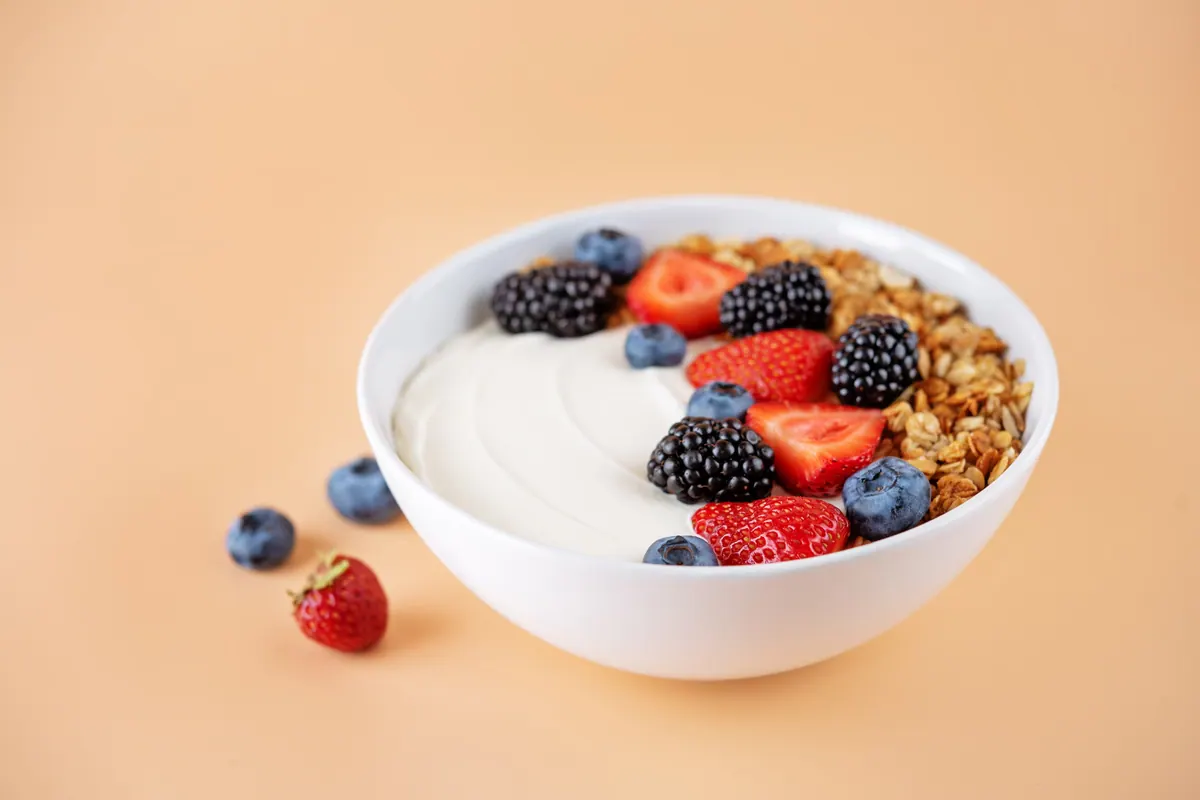
| Breakfast | Plain Greek yogurt with berries, walnuts and oats |
| Lunch | Lentil and vegetable soup, a whole-grain roll, a glass of milk or fortified soy drink |
| Snack | An apple with a piece of cheese, or hummus with carrot sticks |
| Dinner | Baked salmon, brown rice, roasted broccoli and peppers with olive oil |
| Drinks | Water through the day; tea or coffee if you like it; alcohol rarely or not at all |
Quick checklist
- Protein food at each of three meals
- Two or three calcium-rich foods a day
- Half of lunch and dinner plates as vegetables
- Whole grains instead of refined ones
- Fruit as the usual dessert
- Water as the main drink
- Alcohol and sweets kept occasional
Where do fasting and soy fit?
Both come up often, and the evidence for midlife women is thin. On fasting, an NIA summary of a major research review reports benefits for weight and metabolic health in animals and in short human trials, which mostly enrolled overweight, middle-aged adults. Whether the pattern works or is even practical over years in humans is still unknown. On soy, NCCIH concludes there are potential benefits for cholesterol, hot flashes and bone density, but that effects vary by product and population. Soy foods fit easily into Step 1 as a protein source.
Warning signs to raise with a clinician
Talk to your clinician if you notice unplanned weight loss, trouble swallowing, persistent changes in bowel habits, blood in your stool, or new fatigue that does not lift with better eating. Ask before starting supplements if you take thyroid medicine, blood thinners or several other daily medicines.
Call 911 if a food causes swelling of the lips, tongue or throat, trouble breathing or fainting.
How our clinic helps with nutrition in menopause
At our clinic, nutrition guidance is part of menopause care and is built around your labs rather than a generic plan. A provider reviews your eating pattern, weight history and symptoms, and orders labs such as vitamin D, B12, iron studies, A1c, fasting insulin and lipids at San Gabriel or Downey.
Our menopause care program pairs nutrition and strength guidance with treatment for hot flashes, sleep and mood. If your labs show a gap, such as low vitamin D or iron, we explain how to correct it.
Not sure which part of this applies to you? Our symptom assessment is a fast way to see. To plan it with a provider, book a consultation. More practical guides are in our guides library.
