Medication guide · Hair restoration
Minoxidil for Women: 2% vs 5%, Shedding and Results
Short answer
Topical minoxidil is the FDA-approved, over-the-counter treatment for female pattern hair loss. Women can use the 2% solution twice a day or the 5% foam once a day, which performed similarly in a randomized trial. Expect a possible shed in the early weeks, first results after four to six months, and loss of any regrowth if you stop. Scalp irritation and facial hair are the main side effects.
What is topical minoxidil?
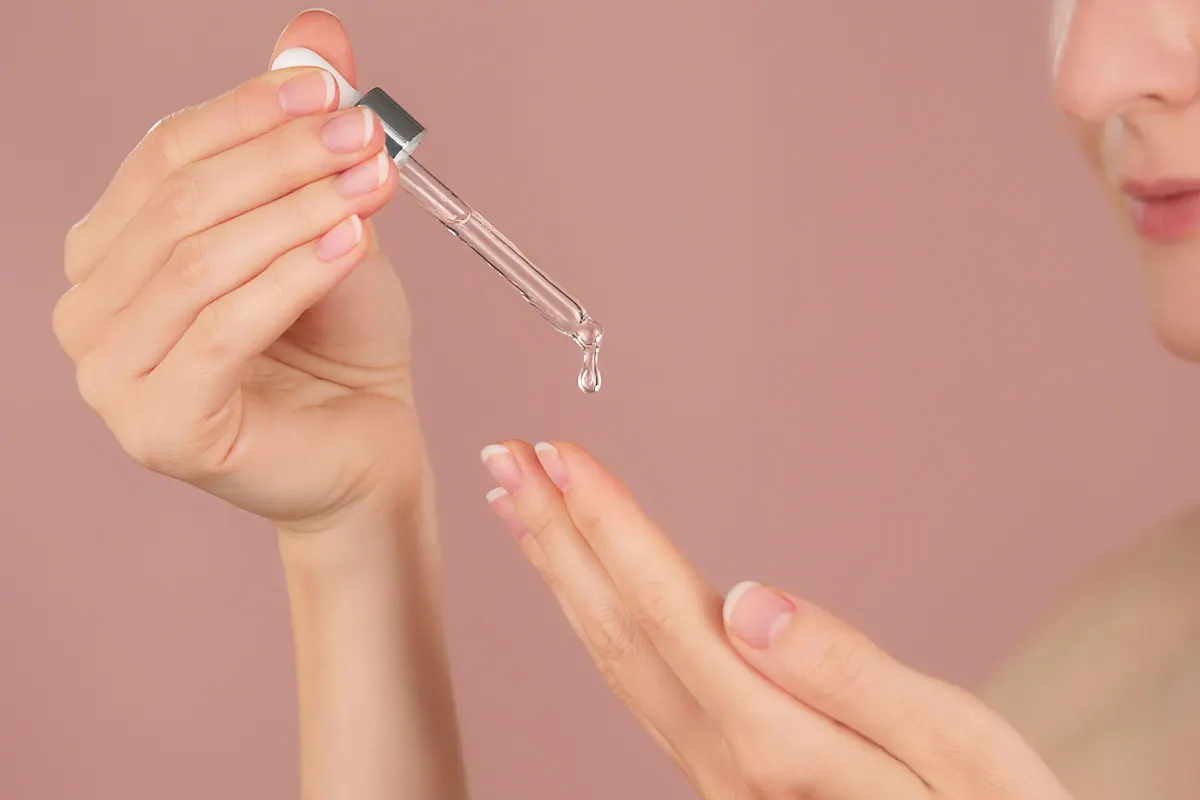
Topical minoxidil is a liquid or foam you apply to the scalp to slow thinning and regrow some hair in female pattern hair loss. It started life as a blood pressure tablet: the International Journal of Women’s Dermatology review notes FDA approved oral minoxidil for high blood pressure in 1979, and hair growth was noticed as a side effect.
It is sold over the counter, and its labels are written for hereditary pattern thinning rather than for shedding caused by illness, childbirth or an unknown reason, which is why a cause should be identified first.
FDA status: the 2% solution and the 5% foam
Both strengths are FDA-approved for women. The same review records that FDA approved 2% minoxidil for female pattern hair loss in 1991 and a once-daily 5% foam in 2014, and that a randomized trial found the 5% foam once daily similar in effectiveness to the 2% solution twice daily.
| 2% solution | 5% foam | |
|---|---|---|
| How much, how often | 1 mL twice a day | Half a capful once a day |
| Where | Directly on the scalp in the thinning area | Directly on the scalp in the thinning area |
| When the label says results may appear | At least 4 months of twice-daily use | As early as 3 months; some women need at least 6 |
| Label advice if nothing has grown | Stop and ask a doctor at 4 months | Stop and ask a doctor at 6 months |
| Contains propylene glycol | Yes | No |
Doses and timings come from the Drug Facts labels for the 2% solution and the 5% foam. The foam suits women whose scalp reacts to the solution: the therapeutic update described below names propylene glycol as the ingredient most often behind that kind of irritation.
How does minoxidil work?
Minoxidil is a potassium channel opener that widens blood vessels, and on the scalp it lengthens the growth phase of hair follicles. The exact way it regrows hair is still not fully understood, according to the Brazilian therapeutic update on female pattern hair loss, which describes effects on blood vessels and on the cells at the base of the follicle.
That mechanism explains the timeline. Follicles have to cycle through a new growth phase before you see anything, so weeks of use show nothing, then months show a little, and the benefit stops when the medicine does.
What results should you expect?
Expect slower loss for most women and modest regrowth for some. The 2% solution label summarizes studies in mostly white women aged 18 to 45 with mild to moderate thinning: after 8 months, 19% reported moderate regrowth and 40% minimal regrowth, against 7% and 33% with the placebo liquid.
The early shed. About 18% of women using topical minoxidil notice a temporary increase in shedding in the first few weeks, according to the therapeutic update. It happens because resting hairs are pushed out as new growth begins, and the authors stress warning women in advance so they do not stop too soon.
When to judge it. The same review says first results appear after four to six months, and that minoxidil must be continued indefinitely to keep them. The labels agree: continued use is needed to increase and keep regrowth, or hair loss will begin again. It will not work for every woman; the review puts non-response at 30% to 60% in some series.
Side effects and warnings
Most side effects stay on the scalp, but a few are signs that minoxidil is reaching the rest of the body. MedlinePlus lists itching, dryness, scaling, flaking, irritation and burning as the common ones, and says minoxidil can make skin more sensitive to sunlight.
Both labels list reasons to stop and ask a doctor:
- Chest pain, a rapid heartbeat, faintness or dizziness
- Sudden, unexplained weight gain
- Swelling of the hands or feet
- Scalp irritation or redness that does not settle
- Unwanted facial hair growth
Call 911 for chest pain with shortness of breath or fainting, rather than waiting to ask.
Keep it away from cats. Minoxidil can poison cats. A 2024 veterinary case report describes a cat that became seriously ill, with low blood pressure, fast heart rate and fluid around the lungs, after knocking over a bottle of topical minoxidil, and needed hemodialysis to recover. Let it dry fully before cuddling a pet, keep bottles and cans out of reach, and wash your hands after applying.
Both products are flammable, so avoid flames and smoking while applying and right afterward.
Who should not use it, and interactions
The labels are specific about who should not use the over-the-counter product without a clinician’s advice. Do not use it if:
- Your pattern of loss is different from the one pictured on the carton, or you have no family history of hair loss
- Your hair loss is sudden or patchy, is associated with childbirth, or has no known cause
- You are under 18
- Your scalp is red, inflamed, infected, irritated or painful
- You use other medicines on the scalp
Ask a doctor first if you have heart disease, and MedlinePlus adds kidney, liver or scalp disease. Both labels say minoxidil may be harmful during pregnancy or breastfeeding, so tell your clinician if either applies. Shedding after a baby has its own timeline, covered in our page on postpartum hair loss. Our symptom assessment can help you judge whether your thinning fits the pattern these labels describe.
Monitoring and when to stop
Topical minoxidil needs no blood tests of its own, but the workup before it often does. Iron, thyroid and hormone tests rule out other causes; our page on TSH levels explains the first thyroid test.
Monitoring is mostly photographic: the same angle and lighting at the start, at about four to six months and at a year. Set a review date with your clinician, and if minoxidil has not helped by then, the next steps include adding or switching treatments. The oral versus topical minoxidil comparison and our review of PRP for women’s hair loss cover the usual options.
Minoxidil at our clinic
Topical or oral minoxidil is part of our hair restoration program, usually after labs for iron, thyroid and hormones, and often alongside PRP or correction of a deficiency. The provider will tell you which form and strength fits your scalp and history and what to expect in the first months, including the shed.
Progress photos taken at your first visit are compared at each review, so decisions rest on what changed rather than on memory. See the hair restoration page for the full program and our medications index for related guides. The free ten-minute call is where to start, and you can book a consultation for the full evaluation.
