Condition · Hair restoration
Female Pattern Hair Loss: Signs, Causes and Treatment
Short answer
Female pattern hair loss is gradual thinning over the crown and along the part, with the front hairline usually kept. It runs in families, becomes more common with age and after menopause, and involves hormones, though most women have normal androgen levels. Thyroid disease, low iron and shedding can look similar. Topical minoxidil is the only FDA-approved medicine for it, and results take 6 to 12 months.
What does female pattern hair loss look like?
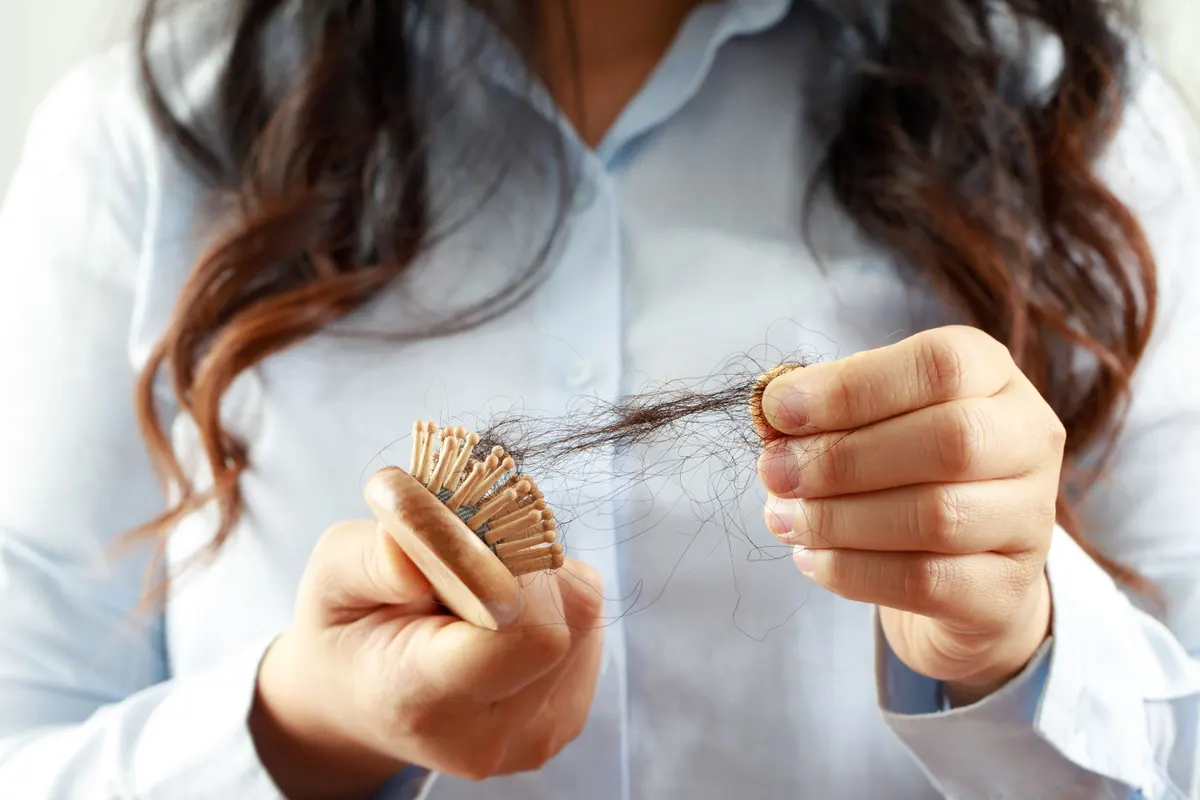
It looks like a part that is slowly getting wider, a ponytail that feels thinner, and more scalp showing through on the crown, while the hairline at the front of your forehead stays where it was. The American Academy of Dermatology describes exactly these signs and notes that hair near the temples may recede a little.
MedlinePlus adds that thinning often starts as a widening center part that branches out like a Christmas tree, that total baldness is rare, and that itching or scalp sores are generally not part of it. Over time the follicles shrink, so each hair grows shorter and finer until some stop growing. You may notice it first in a photo taken from above, or under bright bathroom lights.
What causes it, and what else can look like it?
Female pattern hair loss is inherited, and hormones play a part. The AAD notes you can inherit the genes from either parent, and because it is more common after menopause, hormones probably contribute; MedlinePlus lists aging, changes in androgen levels and a family history of pattern baldness among the links.
It is also the most common cause of hair loss in women, which means it is often blamed when something else is going on. Conditions that can look similar or add to it include:
- Thyroid disease, covered in our answer on thyroid-related hair loss
- Low iron stores, which MedlinePlus names among the causes a clinician checks for
- Telogen effluvium, a temporary burst of shedding after a trigger such as giving birth or a serious illness; our page on postpartum hair loss covers the classic example
- Medicines, including birth control pills whose progestin has strong androgen-like effects, which the International Journal of Women’s Dermatology review lists as a possible contributor
- Scarring or inflammatory scalp conditions, which are the reason a scalp biopsy is sometimes needed
Who gets it, and how is it graded?
Female pattern hair loss becomes more common with each decade. A 2025 Australian review of pattern hair loss puts it at about 12% of women aged 20 to 29, rising to about 40% by age 50; the AAD says it most often begins in midlife but can start earlier.
Clinicians describe severity using the Ludwig scale or the Sinclair scale, which grade how much scalp shows through along the part from normal to extensive thinning. Recording a grade and taking standardized photographs at the first visit gives you something objective to compare against months later, when it is hard to remember how your part used to look.
How is it evaluated?
Evaluation is mostly clinical: a history, a close look at the scalp, and tests chosen to rule out the look-alikes. The AAD’s guide to hair loss diagnosis and treatment describes the pull test, a gentle tug on a small bunch of hairs to see how many come out, and says blood tests or a scalp biopsy are used when a disease, a deficiency, a hormone problem or an infection is suspected.
Specialists agree on what to look for. A task force of the Androgen Excess and PCOS Society recommended that every woman with this pattern be assessed for possible androgen excess, and called measuring vitamin D, iron, zinc, thyroid hormones and prolactin optional but recommended. MedlinePlus lists the signs of excess androgens a clinician checks for: unwanted hair growth on the face or body, menstrual changes, new acne and enlargement of the clitoris.
| Test or check | What it looks for |
|---|---|
| History of shedding, periods, medicines, illness, diet | Triggers for shedding and clues to hormone problems |
| Scalp exam, pull test, dermoscopy | The pattern, active shedding, scarring or inflammation |
| Ferritin and iron studies | Low iron stores |
| TSH, with free T4 if needed | Thyroid disease |
| Vitamin D | Deficiency |
| Testosterone, SHBG and, if indicated, prolactin | Androgen excess or a pituitary cause |
| Scalp biopsy (occasionally) | A skin disorder or scarring hair loss |
If you are not sure whether your symptoms point to thinning, shedding or something else, our symptom assessment can help you put the pattern into words before a visit.
Treatment options, and which ones we offer
The treatment with the strongest evidence is topical minoxidil, and other options are added or substituted depending on the cause and your preferences. MedlinePlus calls minoxidil the only FDA-approved medicine for this condition, and says it may regrow hair in about one in four or five women and slow or stop loss in most. The AE-PCOS task force recommended starting treatment with minoxidil.
| Option | Evidence and status | At our clinic |
|---|---|---|
| Topical minoxidil, 2% solution or 5% foam | FDA-approved for women; must be used long term | Offered |
| Low-dose oral minoxidil | Off-label for hair; compared in oral vs topical minoxidil | Offered when appropriate |
| Correcting low iron, vitamin D or thyroid | Treats contributors found on testing | Offered |
| Platelet-rich plasma (PRP) scalp injections | Off-label; AAD says research is still early | Offered |
| Spironolactone | Off-label; the AAD reports it helps about 40% of women and must not be taken in pregnancy | Not on our menu; ask your clinician |
| Laser combs and caps | Sold without a clinician’s order; AAD notes long-term safety is unknown | Not offered |
| Hair transplant | An option for some women who do not respond to medicine | Referral |
The details of each are on our pages about minoxidil for women and whether PRP works for hair loss. If your thinning started around menopause, our answer on menopause hair loss and HRT explains why hormone therapy is not started for hair alone.
How long until treatment shows results?
Expect six to 12 months before you can judge a treatment, because hair grows slowly. The AAD says minoxidil and other medicines usually need six to 12 months of continuous use, and that if nothing has grown after 12 months, that medicine is unlikely to work for you.
Benefits fade once treatment stops: hair gained with minoxidil or other medicines is lost within a few months to a year of stopping, according to the AAD. The AAD also says treatment works better when it starts at the first signs of thinning, which is a reason not to wait years before having it looked at.
When is hair loss urgent?
Female pattern hair loss is never an emergency, but some changes deserve a prompt appointment rather than a wait-and-see approach:
- Hair coming out in patches, or a bald spot that appears over weeks
- Itching, pain, burning, redness or sores on the scalp, which MedlinePlus says are not typical of pattern thinning
- Thinning together with new facial or body hair, changes in your periods, new acne or enlargement of the clitoris
- Heavy shedding alongside unexplained weight loss, fever or fatigue
These can signal a scarring condition, an infection, a thyroid problem or an androgen-producing condition that needs its own workup.
How hair loss is evaluated at our clinic
At our clinic hair restoration starts with labs for iron, thyroid and hormones, because fixing a deficiency can matter more than any scalp treatment. The provider examines the scalp, takes progress photos and then builds a plan that may combine minoxidil, PRP, correction of iron, vitamin D or thyroid problems, and hormonal options where appropriate.
PRP usually begins with three sessions a month apart, then maintenance, with the scalp numbed first. Plans are reviewed against your photos rather than impressions. The hair restoration page has the details, and more conditions are explained in our conditions library. Everything begins with a free ten-minute call, and labs need an in-person visit once you book a consultation.
