Lab test · Preventative labs
PCOS Blood Tests: Which Hormones to Check and When
Short answer
PCOS blood tests do three jobs. Total and free testosterone show whether androgens are high, with DHEA-S and androstenedione added if testosterone is normal. TSH, prolactin, 17-hydroxyprogesterone and FSH rule out conditions that look like PCOS. Glucose testing and a lipid profile measure metabolic risk. AMH can stand in for an ultrasound in adults. No single test diagnoses PCOS.
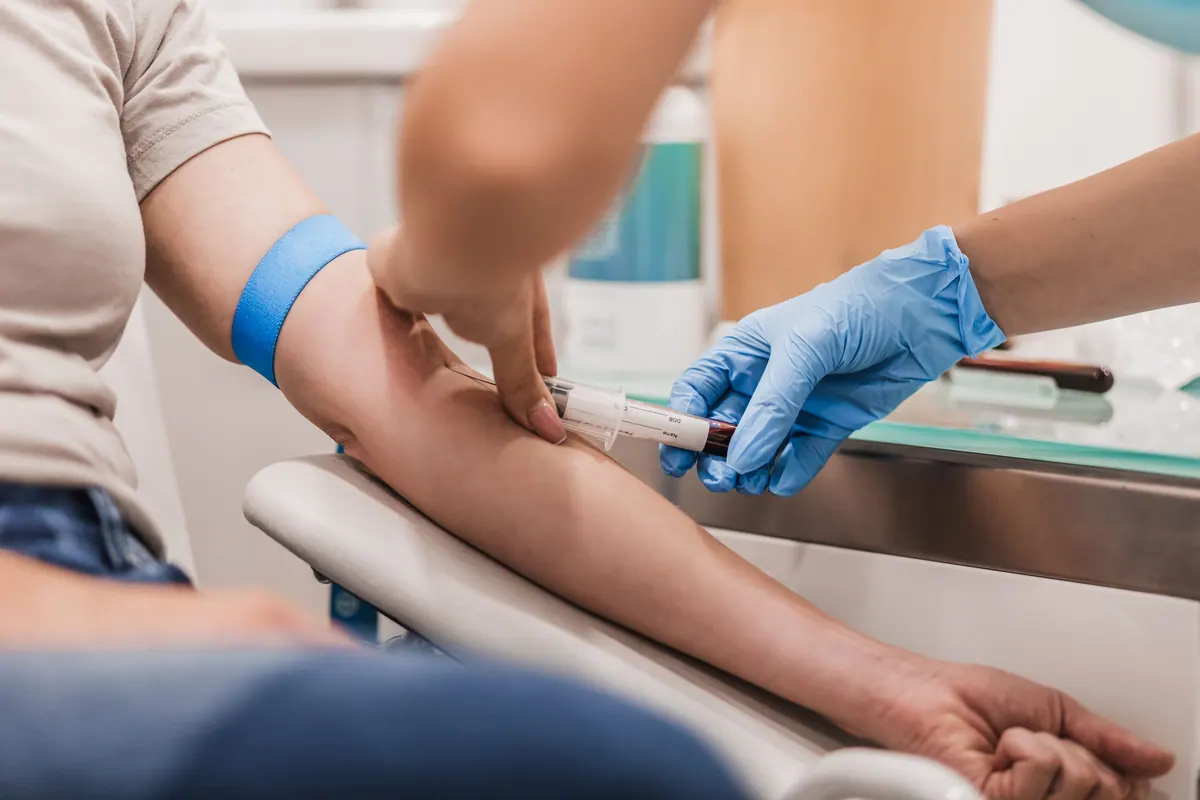
What does a PCOS blood panel measure?
A PCOS panel answers three questions: are androgens high, is something else causing the symptoms, and what is your metabolic risk. The 2023 international PCOS guideline sets out which tests belong in each group.
| Test | Why it is ordered | On our standard women’s panel? |
|---|---|---|
| Total testosterone | First-line androgen test, ideally by mass spectrometry | Yes |
| SHBG, for a calculated free testosterone or free androgen index | Shows how much testosterone is unbound and active | Yes |
| DHEA-S and androstenedione | Considered if testosterone is not raised | Not listed; ask your clinician |
| TSH | Rules out thyroid disease | Yes, with free T4, free T3 and antibodies |
| Prolactin | Rules out a pituitary cause of missed periods | Not listed; ask your clinician |
| 17-hydroxyprogesterone | Rules out non-classic congenital adrenal hyperplasia | Not listed; ask your clinician |
| FSH (and estradiol) | Rules out early ovarian failure | Yes |
| Glucose testing | Measures diabetes risk; a 75 g oral glucose tolerance test is most accurate | A1c and fasting glucose, yes; glucose tolerance test not listed |
| Lipid profile | Recommended for every woman with PCOS at diagnosis | Yes |
| AMH | Can replace ultrasound for ovarian features, adults only | Not listed; ask your clinician |
The guideline is specific about assay quality. It asks laboratories to use liquid chromatography with tandem mass spectrometry for total testosterone, because direct immunoassays are inaccurate at the low levels found in women.
What are the reference ranges?
Reference ranges vary by laboratory, assay and age, so your report’s own range is the one to use. For androgens, the guideline asks labs to set cutoffs for their own method rather than borrow a universal number.
DHEA-S is a good example of how much age matters. The MedlinePlus DHEA-sulfate test page gives these typical ranges for women:
| Age | Typical DHEA-S range |
|---|---|
| 18 to 29 | 45 to 320 µg/dL |
| 30 to 39 | 40 to 325 µg/dL |
| 40 to 49 | 25 to 220 µg/dL |
| 50 to 59 | 15 to 170 µg/dL |
| Over 59 | Less than 145 µg/dL |
For glucose, the American Diabetes Association’s diagnosis page defines an A1c under 5.7% as normal, 5.7% to 6.4% as prediabetes and 6.5% or higher as diabetes, with fasting glucose of 100 to 125 mg/dL counting as prediabetes.
What raises or lowers these results?
Several things move these numbers besides PCOS, which is why results are read together.
- Birth control pills. Combined pills raise SHBG and suppress androgen production, so testosterone can look normal on the pill.
- Age. DHEA-S falls steadily with age, which the guideline names as one reason it is a weaker test than testosterone.
- Adrenal conditions. MedlinePlus lists congenital adrenal hyperplasia and adrenal tumors, as well as PCOS in women under 50, among causes of a raised DHEA-S.
- Other causes of high prolactin. The MedlinePlus prolactin test page lists pituitary tumors, an underactive thyroid, kidney disease and liver scarring, and notes PCOS itself can raise it.
- Congenital adrenal hyperplasia. A high 17-hydroxyprogesterone result points toward it, according to the MedlinePlus 17-OHP test page, and further testing confirms it.
If androgen levels are far above the reference range, the guideline asks clinicians to look for other causes, including ovarian or adrenal tumors, Cushing’s syndrome and, after menopause, ovarian hyperthecosis.
How should you time and prepare for the draw?
Book a morning appointment and plan around fasting and any hormonal contraception.
- Morning draw. MedlinePlus advises drawing testosterone between 7 and 10 a.m., when levels are typically highest, on its testosterone levels test page.
- Fasting for glucose. The ADA defines a fasting glucose test as nothing to eat or drink except water for at least 8 hours. Our guide to fasting before blood work covers coffee, water and medicines.
- Cycle timing. If you still have periods, the cycle day matters for FSH and estradiol; our answer on which cycle day to test hormones explains what to do when cycles are irregular.
- The pill. Do not stop contraception on your own to get a cleaner result. If androgen testing is essential, the guideline suggests a pill-free interval of at least 3 months with another form of contraception, and that is a decision to make with your clinician.
MedlinePlus notes that no special preparation is needed for 17-hydroxyprogesterone.
What do the results mean alongside your symptoms?
Blood results only make sense next to your history and exam. The guideline treats hirsutism alone as a strong predictor of high androgens and PCOS in adults, while acne or scalp thinning on their own are weak predictors. A woman with obvious hirsutism and irregular cycles already meets the criteria, so androgen blood tests add most when hair growth is mild or absent.
Once PCOS is diagnosed, the guideline says repeating androgen tests has a limited role. Glucose status, on the other hand, should be rechecked every 1 to 3 years. How these results fit the wider diagnosis, including the ultrasound criteria, is on our page about PCOS symptoms and diagnosis.
Does our women’s panel include PCOS tests?
Most of the core tests are already in it. Our preventative women’s lab panel includes testosterone, SHBG, estradiol, FSH, TSH with free T4, free T3 and antibodies, A1c, fasting glucose and insulin, lipids, and kidney and liver tests. The draw is same-day at San Gabriel or Downey, results return in 24 to 48 hours, and a provider reviews each one with you.
DHEA-S, prolactin, 17-hydroxyprogesterone and AMH are not named on the standard panel. If your history suggests one is needed, your provider will discuss how it can be added or arranged. Not sure what your symptoms call for? Begin with the symptom assessment, use the free ten-minute call for questions, then book a consultation. Other test explainers are in our labs library.
