Lab test · Preventative labs
FSH Levels in Women: What High FSH Means by Age
Short answer
Follicle-stimulating hormone (FSH) is a pituitary signal that rises as the ovaries slow down. MedlinePlus lists about 4.7 to 21.5 mIU/mL for women who still menstruate and 25.8 to 134.8 after menopause, with ranges varying by lab. A high value carries most weight at 40 or younger, where it can point to ovarian insufficiency. After 45 it usually adds little to your symptoms.
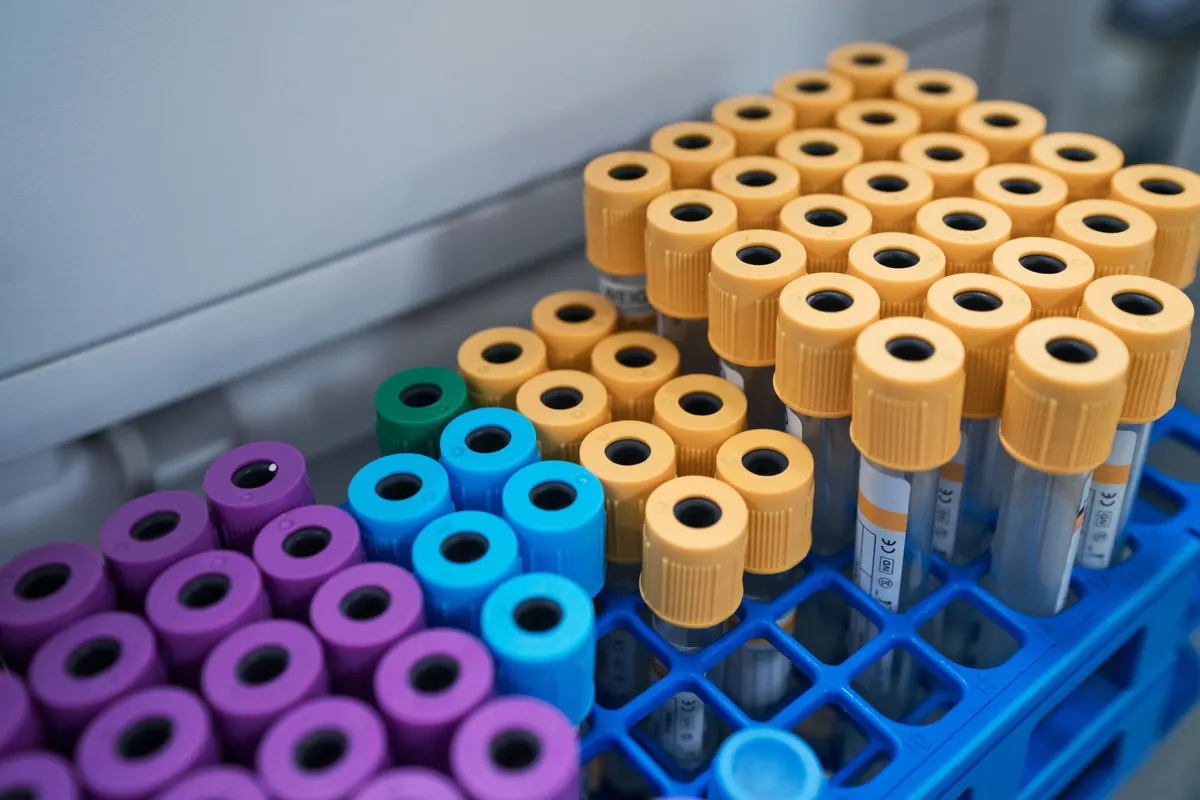
What does an FSH test measure?
It measures follicle-stimulating hormone, a signal your pituitary gland sends to the ovaries to grow and ripen eggs each month. MedlinePlus explains that the pituitary, the hypothalamus and the ovaries regulate FSH together: when the ovaries make less estrogen, the brain turns FSH up to push them harder. A rising FSH therefore usually reflects ovaries that are answering less.
The same MedlinePlus page says women 45 and over can usually skip the test, since a raised FSH is expected at that stage. The test earns its keep when menopause may be coming early, when periods stop for an unclear reason, or when fertility is being assessed.
What are normal FSH levels for women?
The MedlinePlus Medical Encyclopedia gives these typical FSH ranges for females. Values are in mIU/mL, which is numerically the same as IU/L.
| Stage | Typical range (mIU/mL) |
|---|---|
| Before puberty | 0 to 4.0 |
| During puberty | 0.3 to 10.0 |
| Still menstruating | 4.7 to 21.5 |
| After menopause | 25.8 to 134.8 |
Normal ranges vary among laboratories, which may use different measurements or assays, so the reference band your own laboratory prints is the one that applies. The ASRM ovarian reserve opinion adds that different FSH assays correlate well overall but can give different absolute values.
Why can one FSH result mislead in perimenopause?
Because FSH swings widely as the ovaries wind down, a single draw catches one moment of a moving target. The American Society for Reproductive Medicine describes significant inter- and intra-cycle variability that limits the reliability of one measurement, and reads basal FSH on cycle day 2, 3 or 4 alongside estradiol, since an early estradiol rise can mask a high FSH.
The FDA makes the same point about urine FSH kits sold for home use. Its page on home menopause tests says the kits detect FSH about 9 out of 10 times but do not detect menopause or perimenopause, because levels rise and fall during the cycle while the ovaries keep releasing eggs. The agency also warns against stopping contraception on the strength of a positive kit, since pregnancy is still possible.
How is FSH used to diagnose early menopause under 40?
Here a raised FSH carries real weight. The 2024 international guideline on premature ovarian insufficiency, written by ESHRE, ASRM, CREWHIRL and the International Menopause Society, defines the diagnosis as disordered cycles for at least 4 months plus an FSH above 25 IU/L. A single elevated value is enough, with a repeat after 4 to 6 weeks when the picture is uncertain. AMH can support the diagnosis if FSH is inconclusive, but the guideline does not use it as the first test.
NICHD describes the wider workup: a pregnancy test, a physical exam and blood tests that include FSH, LH and estrogen, with a karyotype to look for chromosomal causes. Ovarian insufficiency under 40 matters for bone and heart health over the decades ahead, which is why it deserves a full evaluation rather than a single lab value. Our page on estradiol levels by cycle phase covers the estrogen side of that picture.
What else raises or lowers FSH?
Several things besides age move the number. MedlinePlus lists these causes in women:
- Higher FSH: menopause, including premature menopause; receiving certain hormone therapy; some pituitary tumors; Turner syndrome.
- Lower FSH: being very underweight or recent rapid weight loss; not ovulating; a pituitary gland or hypothalamus that is not producing normal amounts of its hormones; pregnancy.
Thyroid disease can disrupt periods in ways that look like perimenopause, which is why FSH is often drawn with a thyroid panel. The page on TSH levels and what results mean explains that side of the workup.
How should you prepare for an FSH test?
If you still have periods, plan the draw for the second, third or fourth day after your period starts. MedlinePlus lists no fasting step for FSH on its own, though it is often drawn with markers that do need a fast. Tell the lab about any hormonal contraception, hormone therapy or fertility medicines, because each changes what the number means. If your periods have stopped, the draw can happen on any day, and a borderline result is usually repeated rather than acted on.
Is FSH included in our women’s lab panel?
Yes. FSH sits in the hormone section of our preventative lab panel for women, next to estradiol, progesterone, testosterone and SHBG, with thyroid, iron and metabolic markers drawn in the same visit. A provider decides whether FSH is worth running for your question; at 48 with classic hot flashes it often is not, while at 38 with skipped periods it usually is.
Tell us your age, your last period date and any hormonal contraception on the free ten-minute call so the draw can be timed. If you are unsure whether your symptoms call for hormone testing at all, start with the online assessment.
Expect the sample to be taken at your visit in San Gabriel or Downey, with the FSH value and the rest of your order ready inside two days. A provider then walks you through them at a consultation that evaluates your options rather than assuming any treatment. You can schedule a consultation or return to the lab test guides.
