Condition · Aesthetics
Menopause Skin Changes: Dryness, Thinning and Collagen Loss
Short answer
As estrogen falls at menopause, skin holds less water, thins, heals more slowly and loses collagen quickly: the American Academy of Dermatology cites a loss of about 30% in the first five years. The results are dryness, itch, sagging, deeper lines and sometimes adult acne or chin hair. Daily sunscreen, gentle cleansing, moisturizers and retinoids help, and in-clinic treatments can soften lines and volume loss.
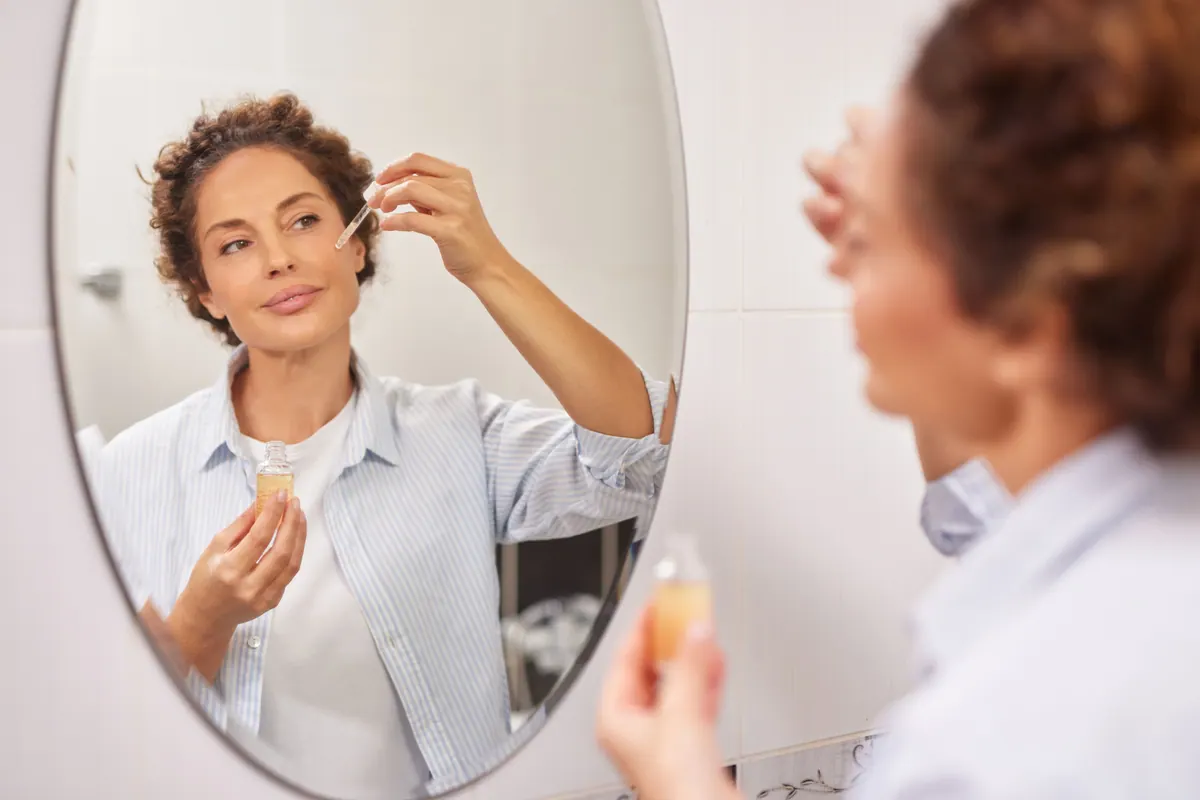
What do menopause skin changes look and feel like?
Dryness, thinning and a change in how the face holds its shape are the core changes. The American Academy of Dermatology (AAD) describes skin that becomes dry, slack and thin as hormone levels fall, along with changes you might not expect to connect with menopause:
- Dryness and tightness, worse in dry air, because skin loses some of its ability to hold water
- Itch, rashes and new sensitivity, as skin pH shifts around 50
- Thinner skin that bruises from bumps you do not remember
- Sagging and deeper lines: jowls, folds from the nose to the corners of the mouth, wrinkles that stay when your face is still
- Adult acne, sometimes for the first time since your teens
- Hair on the chin, jaw or upper lip, with thinning on the scalp
- Slower healing of cuts and scrapes
- Age spots on the face, hands, chest and arms, mostly from years of sun
The National Institute on Aging adds that the outer layer of skin gets paler and less stretchy with age, and that older skin makes less sweat and oil.
How fast does collagen fall after menopause?
Fastest in the first five years. The AAD reports that women’s skin loses about 30% of its collagen during the first five years of menopause. After that, the loss slows to about 2% a year for the next 20 years.
Collagen is the scaffolding that keeps skin firm. As it thins, skin loses support from below, and the AAD traces several familiar changes to that loss: sagging, permanent nose-to-mouth lines, larger-looking pores, a dipping nose tip and pouches under the eyes. That timing fits the experience of a face that seems to change quickly in the early fifties rather than gradually over decades.
Which skin changes are not caused by hormones?
Many of them, and they are worth separating because the fix differs.
| Cause | What it does | Source of the point |
|---|---|---|
| Sun exposure over decades | Age spots, rough texture, wrinkles, skin cancer risk | AAD, NIA |
| Ordinary aging | Loss of collagen and elastin, thinner and paler skin, fragile blood vessels | NIA |
| Smoking, dry climates, too little water | Dry patches, often on shins and forearms | NIA |
| Hot showers, harsh soaps, antiperspirant, perfume | Worse dryness and itch | NIA |
| Underactive thyroid | Dry skin alongside tiredness, feeling cold and constipation | American Thyroid Association |
| Eczema or rosacea | Flares that can worsen around menopause | AAD |
Scalp hair thinning often shows up in the same years and has its own causes to rule out. Our page on hair loss during menopause covers that side.
How are skin changes evaluated?
Mostly by looking and asking, with a few targeted checks. A useful evaluation covers:
- Your skin history: sun exposure, tanning, past skin cancers, eczema or rosacea, and what you use on your skin now.
- A look at spots and moles. The AAD advises a skin cancer screening with a dermatologist, because risk rises with age and some cancers look like age spots. Treating a cancer with a fading cream can delay diagnosis.
- Medicines and symptoms that point elsewhere, such as fatigue and feeling cold with very dry skin, which can justify a thyroid test.
- Your goals: whether dryness, acne, lines or volume loss bothers you most.
The NIA lists warning signs for melanoma under the ABCDE rule: asymmetry, irregular borders, more than one color, a diameter larger than a pencil eraser, and evolving size, shape or color. It also flags a new growth, a sore that does not heal or a bleeding mole. Any of those deserves a prompt visit to a dermatologist.
Treatment paths, from home care to in-clinic options
Daily care that has a track record
The AAD’s menopause advice comes down to a short routine:
- Broad-spectrum sunscreen, SPF 30 or higher, every day, on every area clothing does not cover. It cannot thicken skin, but it helps prevent further thinning, fades and prevents age spots, and lowers skin cancer risk.
- A mild cleanser instead of soap, and skip deodorant bars.
- Moisturizer after bathing and through the day. Products with hyaluronic acid or glycerin are especially helpful, and fragrance-free formulas reduce irritation.
- Retinol or peptides, which the AAD says can increase collagen in skin. A retinoid cream from a dermatologist may help thinning skin.
- Salicylic acid cleanser for acne, avoiding harsh drying products; persistent acne may need hormonal treatment from a dermatologist.
Oral collagen is popular, and a 2021 pooled analysis of hydrolyzed collagen trials reported modest gains in hydration and elasticity, but the trials were small and it is a supplement, not a treatment. The NIA adds a practical warning: be skeptical of products claiming to reverse aging, because many are cosmetics that do not need human testing or FDA approval.
What about hormone therapy?
The Menopause Society’s 2022 statement reports that estrogen therapy increased skin thickness, collagen, elastin and moisture in studies. Skin is not an approved reason to take it, though, and the evidence on wrinkles is mixed; our page on whether HRT improves skin goes through the trials.
In-clinic options
| Option | What it addresses | Offered at our clinic? |
|---|---|---|
| Wrinkle relaxers (Botox and similar) | Forehead lines, frown lines, crow’s feet | Yes |
| Hyaluronic acid dermal fillers | Volume loss in cheeks, lips, jawline, under-eyes | Yes |
| Skin quality treatments | Texture and tone | Yes, after assessment |
| Laser treatment, laser hair removal, microdermabrasion | Thinning, unwanted hair, texture | By referral to a dermatologist |
| Treatment for skin cancer or changing moles | Diagnosis and removal | By referral to a dermatologist |
The FDA approves absorbable, temporary fillers for moderate to severe facial wrinkles and folds and for adding volume to the lips, cheeks and chin in adults over 21. It also warns that fillers can be accidentally injected into a blood vessel; this is uncommon but can cause tissue death, vision problems including blindness, or stroke.
When a skin change is urgent
After a filler injection, skin that turns pale, white or very painful, or any change in your vision, needs emergency care immediately.
A mole or spot that is changing, bleeding or not healing should be seen by a dermatologist promptly, without waiting for a routine visit.
How our clinic approaches menopause skin
At our clinic, a skin visit starts with a face assessment and a conversation about what bothers you most, not a menu. A provider asks about sun history, skin conditions and medicines, and looks for signs that point to thyroid or other causes before suggesting treatment.
Our aesthetics services include wrinkle relaxers, hyaluronic acid fillers for cheeks, lips, jawline and under-eyes, and skin quality treatments, done conservatively with a review at two weeks. Home care, sunscreen and a dermatology referral for spots or lasers are part of the same plan.
Not sure whether your skin changes are hormonal, thyroid-related or something else? Our quick symptom assessment can help. To plan treatment, book a consultation, or browse related topics in our conditions library.
