Comparison · Aesthetics
Botox vs Dysport vs Xeomin: Differences That Matter
Short answer
Botox Cosmetic, Dysport and Xeomin are three brands of botulinum toxin type A that relax the muscles behind expression lines. Their FDA labels differ in approved areas: all treat frown lines, Botox and Xeomin also cover forehead lines and crow's feet, and only Botox covers neck bands. Units are not interchangeable between brands. Xeomin is purified of accessory proteins, and all three share a boxed warning on toxin spread.
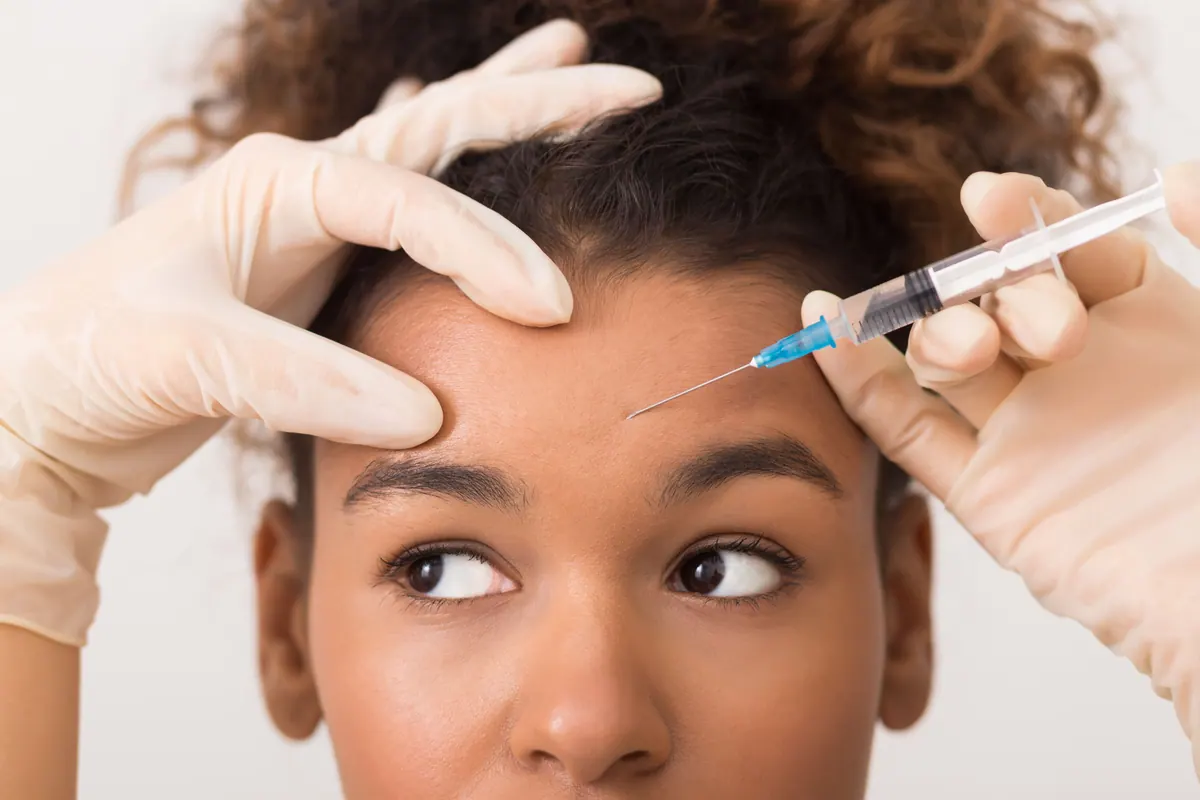
The verdict: three versions of one toxin, dosed in units that do not convert
For most women the brand matters less than the injector’s skill and an honest dose for your face. Botox Cosmetic has the widest list of approved cosmetic areas, Xeomin covers the upper face with a formulation stripped of accessory proteins, and Dysport is approved for frown lines only and carries a cow’s milk protein warning.
All three are botulinum toxin type A, all work the same way, and all carry the same boxed warning. The one difference no one should gloss over is the unit: a unit of one brand is not a unit of another, so a price per unit, or a dose remembered from last time, cannot be carried from one product to the next.
Botox Cosmetic, Dysport and Xeomin side by side
| Botox Cosmetic | Dysport | Xeomin | |
|---|---|---|---|
| Generic name | onabotulinumtoxinA | abobotulinumtoxinA | incobotulinumtoxinA |
| Cosmetic areas on the label | Frown lines, crow’s feet, forehead lines, neck (platysma) bands | Frown lines, adults under 65 | Frown lines, forehead lines, crow’s feet |
| Label dose for frown lines | 20 units at 5 sites | 50 units at 5 sites | 20 units at 5 sites |
| Upper-face maximum in one session | 64 units for all three areas | Not applicable | 64 units for all three areas |
| What else is in the vial | Toxin complex with accessory proteins, human albumin, salt | Toxin complex with hemagglutinin proteins, human albumin, lactose; may contain trace cow’s milk protein | Toxin separated from accessory proteins, human albumin, sucrose |
| Retreatment interval on the label | Dosing more often than every 3 months not studied | No more often than every 3 months | No more often than every 3 months |
| Boxed warning on distant spread | Yes | Yes | Yes |
Notice that Dysport’s frown-line dose is 50 units while the other two use 20. That does not make Dysport two and a half times stronger or weaker; it reflects a different potency assay, which is exactly why the labels forbid converting units between brands.
Doses and areas are taken from the current Botox Cosmetic, Dysport and Xeomin labels on DailyMed. Treating an area that is not on a product’s label is off-label use, which your injector should say out loud if it is part of the plan.
How botulinum toxin type A works on expression lines
Each product blocks the release of acetylcholine, the chemical a nerve uses to tell a muscle to contract. The injected muscle relaxes for a few months, and the line it creates when you frown, squint or raise your brows softens.
That is why these products suit lines that come from movement and do little for creases that are present even when your face is still, or for volume that has thinned with age. The difference, and when filler is the better tool, is laid out in our comparison of Botox and fillers. The American Academy of Dermatology says most people see results within 3 to 7 days and that the effect lasts about 3 to 4 months, sometimes longer.
Formulation differences: accessory proteins and milk protein
The three products differ in what surrounds the active toxin, which matters for a few specific women. Botox Cosmetic and Dysport contain the toxin as part of a complex with other bacterial proteins; Xeomin’s label describes the active neurotoxin separated from those accessory proteins.
- Cow’s milk protein: Dysport’s label says it may contain trace amounts and is contraindicated in anyone allergic to cow’s milk protein.
- Human albumin: all three contain it, as a stabilizer.
- Sucrose or lactose: Xeomin contains sucrose, Dysport lactose.
Whether the protein-free formulation of Xeomin changes long-term results for a typical patient is not something these labels address, and we have not seen it settled in the sources reviewed for this page. It is a reasonable question to raise if you have had several years of treatment and feel it has become less effective.
Risks the three share, and the boxed warning
All three labels carry the same boxed warning: the toxin’s effect can spread beyond the injection site and cause weakness, drooping eyelids, double vision, swallowing or speech problems or breathing difficulty, from hours to weeks after treatment. The labels note that swallowing and breathing problems can be life threatening and that deaths have been reported, with the risk probably greatest in children treated for spasticity.
At cosmetic doses, the common effects in Botox Cosmetic’s trials were eyelid drooping in 3% of people treated for frown lines, eyelid swelling in 1% treated for crow’s feet, and headache in 9% and brow drooping in 2% of those treated for forehead lines. Every label lists infection at the injection site and allergy to any botulinum toxin product as reasons not to inject.
Get emergency care for trouble swallowing, speaking or breathing in the days or weeks after any botulinum toxin injection.
Popularity is not evidence of difference
Neuromodulators were half of all minimally invasive cosmetic treatments in 2025, according to the American Society of Plastic Surgeons, which also names Letybo, Jeuveau and Daxxify alongside the three brands compared here. More brands means more marketing claims about speed and duration, yet none of the three labels compared here reports a head-to-head cosmetic trial against another brand.
The more useful questions for any brand are what its label approves, how many units your injector plans for each area and why, and how they will judge the result at follow-up. If you are unsure whether lines, volume loss or skin quality is the main issue, our symptom assessment can help you decide what to raise first.
How we choose a product with you
At our clinic, wrinkle relaxers are given after a face assessment, starting conservatively, with a review at two weeks to add a little if needed. We use Botox and similar products for forehead lines, frown lines and crow’s feet, and the provider will tell you which product is planned, the unit dose for each area and whether any area is off-label.
If you are pricing treatment, our guide to Botox cost by unit and area shows why units cannot be compared across brands. The aesthetics page describes everything we offer, and our comparisons hub holds related side-by-sides. Start with the free ten-minute call and then book a consultation for a face assessment.
