Comparison · Sexual wellness
Addyi vs Vyleesi: Daily Pill or On-Demand Injection
Short answer
Addyi (flibanserin) is a tablet taken every night at bedtime and is approved for women under 65 with acquired, generalized low desire disorder, before or after menopause. Vyleesi (bremelanotide) is a self-injection used at least 45 minutes before sex and is approved only for premenopausal women. Addyi's main risk is fainting with alcohol; Vyleesi's are nausea and a brief rise in blood pressure.
Which one suits whom?
Addyi tends to suit a woman who is comfortable with a nightly routine, drinks little or no alcohol, takes no interacting medicines and may be past menopause. Vyleesi tends to suit a premenopausal woman who would rather use something only when she expects sex, has well-controlled blood pressure and no heart disease, and can tolerate a chance of nausea.
Both labels share the same boundaries. Each treats acquired, generalized hypoactive sexual desire disorder (HSDD) that causes marked distress, and neither applies when another illness, a mental health condition, relationship trouble or a medicine explains the low desire. Neither is meant to enhance sexual performance, and each says to stop after eight weeks if there is no improvement.
How do Addyi and Vyleesi compare side by side?
| Addyi (flibanserin) | Vyleesi (bremelanotide) | |
|---|---|---|
| First FDA approval | August 18, 2015 | June 21, 2019 |
| Approved for | Women younger than 65, any menopausal status | Premenopausal women only |
| Form and timing | One 100 mg tablet each night at bedtime | 1.75 mg autoinjector into the abdomen or thigh, 45 minutes or more before sex |
| How it acts | Serotonin receptor agonist and antagonist; mechanism in HSDD unknown | Melanocortin receptor agonist; mechanism in HSDD unknown |
| Use limits | Once daily | No more than 1 dose in 24 hours; more than 8 a month not recommended |
| Most common side effects | Dizziness, sleepiness, nausea | Nausea, flushing, injection site reactions, headache |
| Key warning | Fainting and low blood pressure with alcohol, some medicines or liver impairment | Temporary blood pressure rise; not for uncontrolled hypertension or heart disease |
| Interactions to know | Moderate or strong CYP3A4 inhibitors are contraindicated | Avoid with oral naltrexone; may slow absorption of oral drugs |
| Stop if no benefit | After 8 weeks | After 8 weeks |
| Offered at our clinic | No | No |
Details come from the Addyi label, the Vyleesi label and the Drugs@FDA record for Vyleesi.
How does each one work?
Both act in the brain, and in both cases the label says the exact mechanism in HSDD is unknown. Flibanserin acts on serotonin receptors, stimulating 5-HT1A and blocking 5-HT2A, and its effect builds with regular nightly use; our flibanserin medication guide covers it in more depth.
Bremelanotide is a synthetic peptide that activates several melanocortin receptors, with MC1R and MC4R the most relevant at treatment doses. MC4R-carrying neurons are found throughout the central nervous system. MC1R sits on the skin’s pigment cells, which explains one of its side effects: darkened patches of skin.
What did the trials show?
Both produced modest gains over placebo, measured in slightly different ways, and the two have not been tested against each other in the trials their labels describe.
- Addyi, across the three premenopausal trials, each 24 weeks long, added 0.5 to 1.0 satisfying sexual events per 28 days over placebo (median differences) and raised desire scores by 0.3 to 0.4 points on a 1.2 to 6 scale. In postmenopausal women under 65, the gain was 0.4 events and 0.3 points.
- Vyleesi, in two identical 24-week trials of 1,247 premenopausal women, raised the desire score by a mean of 0.5 and 0.6 points against 0.2 on placebo, and reduced distress about low desire. Most women used it two or three times a month.
What are the risks of each?
Addyi’s main danger is fainting from low blood pressure. Its boxed warning covers alcohol close to the dose, moderate or strong CYP3A4 inhibitors, and any liver impairment. In premenopausal trials, dizziness affected 11.4%, sleepiness 11.2% and nausea 10.4% among women on the drug.
Vyleesi’s main problems are nausea and short-lived blood pressure changes. Nausea affected 40% of users in the trials, highest after the first dose, and led 8% to stop. Flushing affected 20.3%, injection site reactions 13.2% and headache 11.3%. Blood pressure rose by up to 6 mmHg systolic and 3 mmHg diastolic, peaking two to four hours after the dose, with heart rate falling by up to 5 beats a minute, usually back to baseline within 12 hours. Focal darkening of the skin, gums or breasts occurred in 1% of users taking up to eight doses a month; it did not always fade after stopping, and women with darker skin were more likely to develop it. Overall, 18% stopped Vyleesi because of side effects, against 2% on placebo.
Call 911 for fainting that does not quickly resolve, chest pain or pressure, or a sudden severe headache after either medicine.
What changes in daily life with each?
The biggest difference is routine. Addyi means a pill every night and alcohol planning: the label sets a two-hour gap after one or two drinks before the bedtime dose, and a skipped dose after three or more. It also means checking every new medicine, antibiotic or antifungal for CYP3A4 interactions.
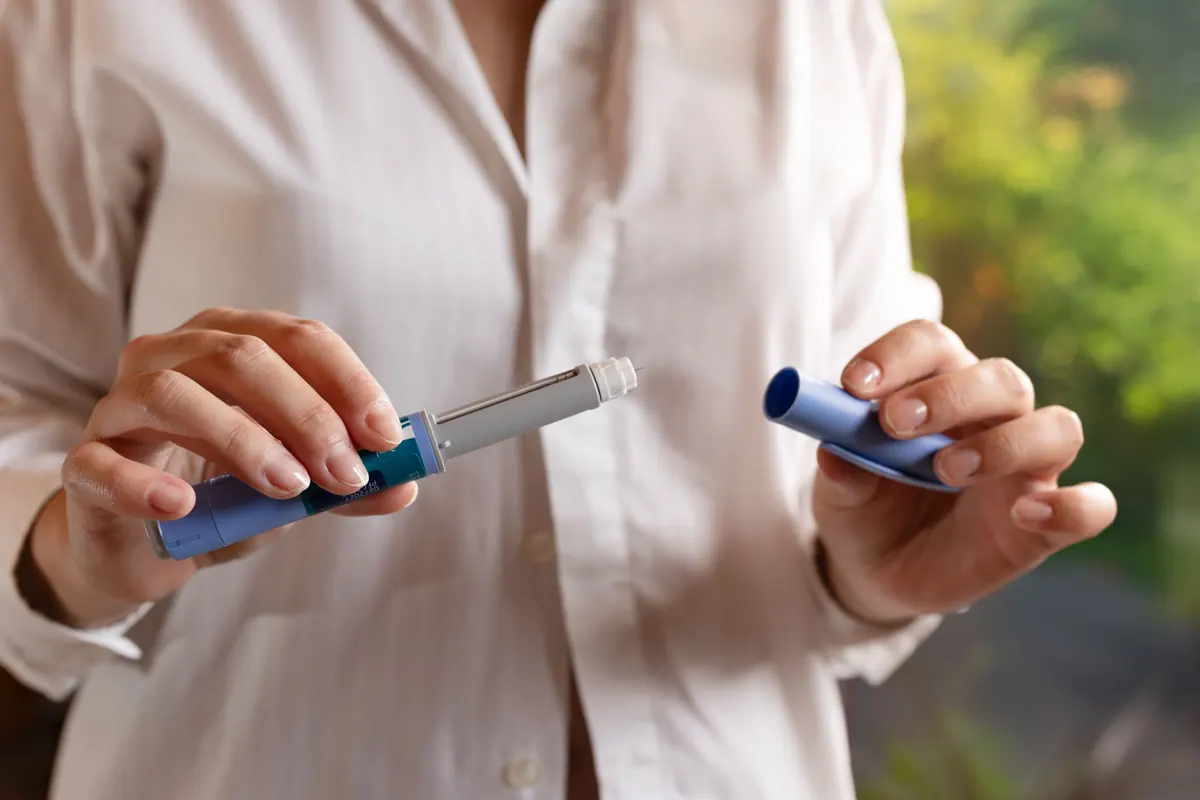
Vyleesi means carrying an autoinjector and using it ahead of anticipated sex, no more than once in 24 hours. Because it may slow stomach emptying, the label advises avoiding it when taking oral drugs that depend on reaching a certain level, such as some antibiotics, and warns against combining it with oral naltrexone. The Vyleesi label also asks women to use effective contraception, since animal studies raised concern about fetal harm.
What should you weigh with a clinician?
A clinician first confirms the diagnosis fits the labels: desire that has dropped, causes distress, and is not explained by pain, mood, medicines or the relationship. Questions worth working through together:
- Are you before or after menopause, and how old are you?
- How much alcohol do you drink, and when?
- What other medicines and supplements do you take?
- Is your blood pressure controlled, and do you have any heart disease?
- Would you rather take something daily or only before sex?
If the main change is in orgasm rather than desire, neither drug targets it; our condition page on trouble reaching orgasm after menopause covers that. If pain is the problem, The Menopause Society’s 2022 position statement lists ospemifene and vaginal DHEA as FDA-approved non-estrogen options for painful sex after menopause; our guide to ospemifene (Osphena) explains the pill. Testosterone is a third route for some postmenopausal women; the Global Consensus Position Statement supports it only for HSDD after menopause.
Where our clinic fits
Neither Addyi nor Vyleesi is on our clinic’s treatment list, so raise either with your clinician if you want to know whether it could suit you. Our clinic’s own approach to low desire starts with a private look at hormones, medicines, pelvic floor and relationship factors, with treatments drawn from the sexual wellness program, including vaginal estrogen or DHEA, low-dose testosterone after menopause, moisturizers and pelvic floor treatment.
Not sure which problem you are trying to solve? The symptom assessment can help. The free ten-minute call starts the process, and consultations are held in our San Gabriel and Downey clinics or over video. More side-by-side guides are in the compare library, and booking a consultation gets you a private conversation about all of these options.
