Medication guide · Sexual wellness
Prasterone (Intrarosa): Vaginal DHEA for Painful Sex
Short answer
Prasterone (Intrarosa) is a 6.5 mg vaginal insert of DHEA, used once nightly at bedtime, approved by the FDA in November 2016 for moderate to severe pain with sex caused by menopause. Cells in the vaginal lining convert it into small amounts of estrogens and androgens. In 12-week trials it eased pain more than placebo. Vaginal discharge is the most common side effect, and the label has no boxed warning.
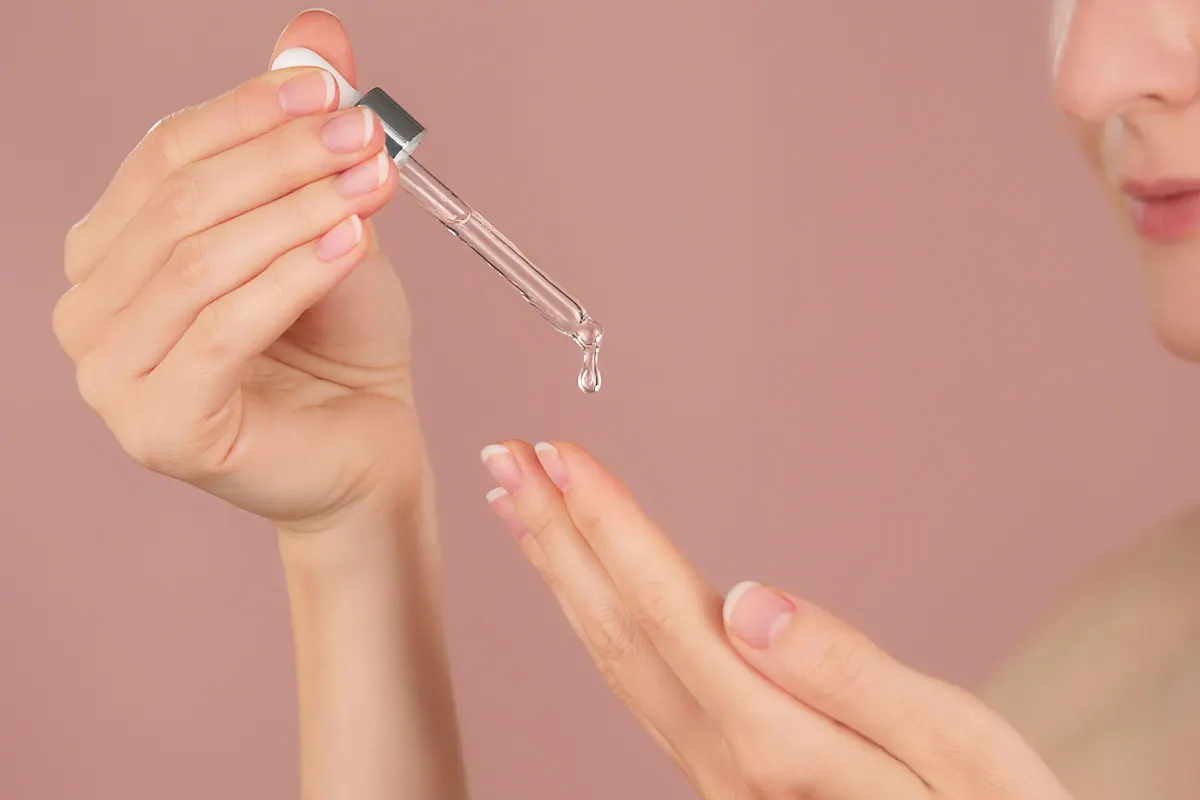
What prasterone is and when the FDA approved it
Prasterone is the drug name for dehydroepiandrosterone, or DHEA, a steroid the body makes and then converts into sex hormones. Intrarosa is a vaginal insert containing 6.5 mg of it, shaped like a small bullet about 28 mm long and made of a solid fat base. Drugs@FDA lists the original approval on 16 November 2016.
The Intrarosa label, revised in January 2026, gives one indication: moderate to severe dyspareunia, the medical word for pain during sex, as a symptom of vulvar and vaginal atrophy due to menopause. The Office on Women’s Health lists vaginal DHEA alongside vaginal estrogen as a treatment for dryness and painful sex.
How vaginal DHEA works
Prasterone itself is inactive. Enzymes inside cells, including hydroxysteroid dehydrogenases, 5-alpha reductases and aromatase, turn it into androgens and estrogens, and the label says its exact mechanism in vaginal atrophy is not fully established. The Menopause Society’s 2020 position statement describes vaginal cells converting DHEA into estradiol and testosterone locally.
Why both hormones matter is part of the interest. The same statement notes that estrogen receptors are densest inside the vagina, while androgen receptors are more plentiful in the external genitalia.
In a small study on the label, a week of nightly inserts raised average peak estradiol from 3.33 pg/mL with placebo to 5.04 pg/mL, and peak testosterone from 0.12 to 0.15 ng/mL, both small changes.
What the 12-week trials showed
Two 12-week placebo-controlled trials in postmenopausal women whose most bothersome symptom was painful sex supported approval. Trial 1 enrolled 255 women and Trial 2 enrolled 558, and the table shows the groups analyzed.
| Measure, change over 12 weeks | Trial 1: Intrarosa (n = 81) | Trial 1: placebo (n = 77) | Trial 2: Intrarosa (n = 325) | Trial 2: placebo (n = 157) |
|---|---|---|---|---|
| Pain with sex severity | -1.27 | -0.87 | -1.42 | -1.06 |
| Superficial (mature) cells | +5.62 percentage points | +0.91 | +10.20 | +1.75 |
| Parabasal (immature) cells | -47.40 percentage points | -1.62 | -41.51 | -11.98 |
| Vaginal pH | -1.04 | -0.21 | -0.94 | -0.27 |
All differences from placebo were statistically significant. The placebo groups improved too, so the true extra benefit is the gap between the columns, about 0.35 to 0.40 points on the pain scale. The Menopause Society rates vaginal DHEA as a Level A option for moderate to severe genitourinary syndrome of menopause.
Who was studied matters when you read these numbers. Across the four 12-week trials, women were 40 to 80 years old with an average age of 58.8, and 91% were White non-Hispanic, 7% Black and 2% other groups. Of the 1,522 women treated across the 12-week and year-long studies, 19% and 11% respectively were 65 or older, so evidence for older women and for many ethnic groups is thinner.
How to use it nightly
The label’s directions are one insert, once a day, at bedtime, placed with the applicator provided. Each box holds 28 inserts in blister packs with 28 applicators, so one box covers four weeks. It can be stored at room temperature or in the refrigerator, between 41°F and 86°F.
Your clinician sets the plan, including how long to continue before judging the result.
Side effects: discharge and Pap findings
Vaginal discharge is the side effect you are most likely to notice. In four 12-week trials it was reported by 38 of 665 women on Intrarosa (5.71%) and 17 of 464 on placebo (3.66%). In a 52-week open-label study, 14.2% of 521 women reported discharge.
The same year-long study found abnormal Pap smears in 2.1% at 52 weeks: one low-grade lesion and ten cases of atypical cells of undetermined significance. The label asks clinicians to tell women that abnormal Pap findings may occur, so keep cervical screening on schedule and mention that you use Intrarosa when you have a Pap test.
Cautions, who should not use it, and monitoring
The label lists one contraindication: undiagnosed abnormal genital bleeding, which must be evaluated before treatment. It carries no boxed warning.
Its main warning concerns breast cancer. Because estrogen is a metabolite of prasterone, and estrogen is contraindicated with known or suspected breast cancer, the label notes Intrarosa has not been studied in women with a history of breast cancer. The 2020 position statement says vaginal DHEA is not contraindicated for these women but that US labeling advises caution, and our page on vaginal estrogen after breast cancer explains how that decision is shared with an oncologist.
On the uterine lining, the position statement reports that biopsies in 422 women after 52 weeks of DHEA showed inactive or atrophic endometrium in all of them. It also cautions that long-term endometrial safety data beyond a year are lacking, and any spotting or bleeding after menopause needs prompt evaluation.
Intrarosa is indicated only after menopause, and it has not been studied in pregnancy, breastfeeding, or in women with kidney or liver impairment.
Monitoring means a follow-up visit to judge comfort and side effects, routine Pap screening, and reporting any bleeding promptly.
How it compares with other options
Prasterone is one of three FDA-approved options for painful sex from menopause that need a clinician’s order, alongside low-dose vaginal estrogen and the daily pill ospemifene. It is an alternative when vaginal estrogen is not wanted, although estrogen is among the hormones it becomes. The trade-off is a nightly routine instead of twice-weekly tablets or a three-month ring. Our page on ospemifene (Osphena) covers the oral option, and our page on painful sex after menopause explains when pelvic floor therapy belongs alongside any of them.
Is vaginal DHEA offered at our clinic?
Yes. Vaginal DHEA is listed in our sexual wellness treatments for genitourinary symptoms of menopause, as an alternative to vaginal estrogen. A provider confirms with an in-person exam that thin, dry tissue is the cause of your pain, checks your bleeding and cancer history, and talks through nightly use and the discharge it brings, before deciding together whether it suits you.
If you are weighing several options and are not sure which fits, our symptom assessment is a quick start, and the medications library covers each alternative. You can request a consultation once you have had the free ten-minute phone call.
