Medication guide · Sexual wellness
Ospemifene (Osphena): The Oral Pill for Painful Sex
Short answer
Ospemifene (Osphena) is a 60 mg tablet taken once daily with food, approved in 2013 for moderate to severe painful sex after menopause and in 2019 for vaginal dryness. It is a selective estrogen receptor modulator that acts like estrogen on vaginal tissue. It suits women who cannot use vaginal products, but it can increase hot flashes and carries a boxed warning on the uterus, stroke and clots.
What ospemifene is and its FDA status
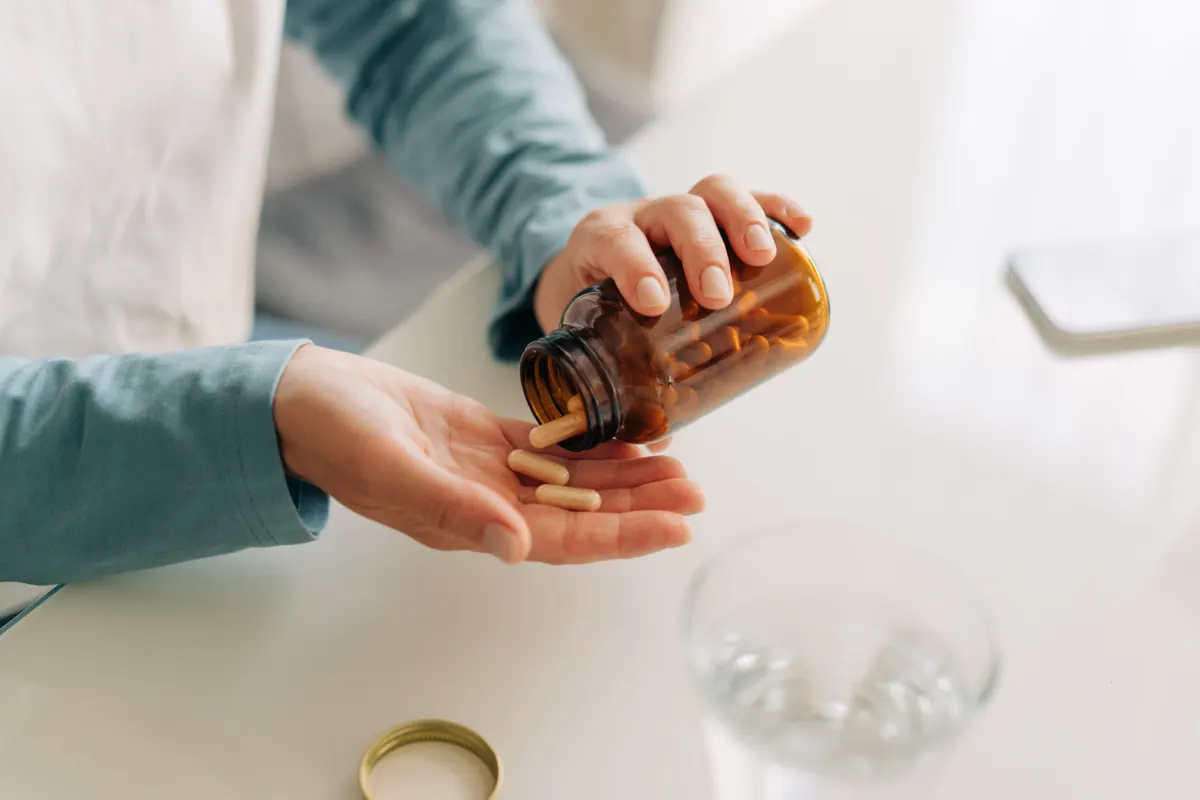
Ospemifene is a once-daily oral tablet for vaginal symptoms of menopause, sold as Osphena. Drugs@FDA records its approval as a new molecular entity on 26 February 2013, and a new indication approved on 25 January 2019. The current Osphena label lists two uses: moderate to severe dyspareunia (pain with sex) and moderate to severe vaginal dryness, both as symptoms of vulvar and vaginal atrophy due to menopause.
The dose is one 60 mg tablet a day, taken with food. It needs a clinician’s order. The Menopause Society’s 2020 position statement describes it as the only oral product approved for these symptoms.
How a SERM treats vaginal tissue
Ospemifene is a selective estrogen receptor modulator, or SERM, which the label calls an estrogen agonist/antagonist with tissue-selective effects. ACOG explains the idea: SERMs stimulate some estrogen-responsive tissues while leaving others alone, which can be useful for women who do not want whole-body estrogen therapy.
In the vagina it acts like estrogen, thickening the lining and lowering pH. In the uterine lining it also acts like estrogen, which is the reason for its uterine warning. In laboratory and preliminary studies of breast tissue cited by the position statement, it behaved more like an anti-estrogen, but it has not been adequately studied in women with breast cancer.
Why choose a pill instead of a vaginal product?
A pill can make sense when using something in the vagina is hard or unwanted, for example with limited reach, insertion that hurts, or a strong dislike of applicators and discharge.
The trade-off is that a pill reaches the whole body. Vaginal estrogen and vaginal DHEA act mostly where they are placed, while ospemifene brings systemic effects such as hot flashes and clot risk. That trade-off is worth weighing with your clinician, and our page on vaginal DHEA (prasterone) covers the other non-estrogen option.
What the trials showed
In 12-week placebo-controlled trials, ospemifene reduced the severity of painful sex and dryness more than placebo. On the label’s severity scores:
| Trial (women with that as their most bothersome symptom) | Ospemifene 60 mg | Placebo |
|---|---|---|
| Trial 1, pain with sex | -1.4 (n = 110) | -0.9 (n = 113) |
| Trial 2, pain with sex | -1.5 (n = 301) | -1.2 (n = 297) |
| Trial 1, vaginal dryness | -1.3 (n = 113) | -0.9 (n = 104) |
| Trial 3, vaginal dryness | -1.3 (n = 269) | -0.9 (n = 263) |
Vaginal cells matured and pH fell significantly in every trial. One trial, Trial 2, did not show a significant improvement in dryness, which is worth knowing if dryness rather than pain is your main problem. A 52-week extension in 180 women reported in the position statement showed sustained improvement on exam, with no cases of clots, endometrial hyperplasia or cancer.
Side effects, including more hot flashes
Hot flashes are the side effect that stands out in the label’s 12-week trials:
| Side effect | Ospemifene 60 mg (n = 1,459) | Placebo (n = 1,136) |
|---|---|---|
| Hot flush | 6.5% | 2.6% |
| Vaginal discharge | 3.8% | 0.4% |
| Muscle spasms | 1.8% | 0.6% |
| Excessive sweating | 1.1% | 0.2% |
Across trials lasting up to 52 weeks, hot flushes rose to 12.2% versus 4.2% on placebo, and vaginal discharge to 6.0% versus 0.6%. Night sweats and vaginal bleeding were also more frequent than with placebo.
The boxed warning and who should not take it
The label’s boxed warning covers endometrial cancer and cardiovascular disorders. In the trials, lasting up to 15 months:
- strokes from clots occurred at 1.13 and strokes from bleeding at 3.39 per 1,000 woman-years on ospemifene, compared with 3.15 and 0 on placebo;
- deep vein thrombosis occurred in 2 of 1,459 women on ospemifene and 1 of 1,136 on placebo;
- no endometrial cancer was seen with up to 52 weeks of use, but a uterine lining of 5 mm or more was found at 101.4 per 1,000 women versus 20.9 on placebo.
Contraindications include undiagnosed genital bleeding, estrogen-dependent cancer, a current or past blood clot, stroke or heart attack, a known or suspected pregnancy, and an allergy to the drug. The label says it should not be used with known, suspected or past breast cancer, because it has not been adequately studied there, and it is not recommended with severe liver impairment.
MedlinePlus lists the warning signs to act on right away: leg swelling or pain, warm or red skin, slow speech, dizziness, weakness or numbness of an arm or leg, a sudden severe headache, sudden vision changes, or pain in the chest, arms, back, neck or jaw, or shortness of breath. Chest pain, breathlessness, sudden one-sided weakness, face droop, trouble speaking or sudden vision loss means calling 911. Any vaginal bleeding while taking it needs prompt evaluation.
Interactions and monitoring
Ospemifene is broken down mainly by the liver enzymes CYP3A4 and CYP2C9, so several medicines change its levels. The label says:
- do not take it with estrogens or other SERMs;
- do not take it with fluconazole, which raises ospemifene exposure 2.7-fold;
- do not take it with rifampin, which lowers exposure by 58%;
- ketoconazole raises exposure 1.4-fold with long-term use;
- because it is more than 99% bound to blood proteins, it may affect other highly protein-bound drugs.
The label also notes that adding a progestin was not evaluated in the trials. Monitoring means regular review with your clinician, prompt reporting of any bleeding, and an evaluation of the uterine lining if bleeding occurs.
Ospemifene and our clinic
Ospemifene is not named among the treatments our clinic lists, so ask your clinician whether it fits you. Our providers can explain how it compares with the options we do offer.
What our sexual wellness care does include for painful sex after menopause is low-dose vaginal estrogen or vaginal DHEA, moisturizers and lubricants, and pelvic floor treatment. A provider first examines you in person to confirm the cause, since our page on painful sex after menopause explains that thin tissue is only one of several reasons sex hurts, and our page on painful sex before menopause covers causes in younger women.
If you are unsure which route suits your symptoms, start with the symptom assessment or the medications library. After the free ten-minute phone call, you can set up a consultation in person or by video.
