Answer · Pelvic floor
Emsella Side Effects and Who Should Not Have Treatment
Short answer
Emsella's reported side effects are mostly mild and temporary: muscle soreness or spasm, joint or tendon aches, tingling, skin redness and, in the FDA summary, increased sensitivity during sex. It is not used during pregnancy or in women with a pacemaker, other implanted electronics or metal implants near the pelvis, and studies also excluded recent surgery, fever and tumors in the area.
What side effects can Emsella cause?
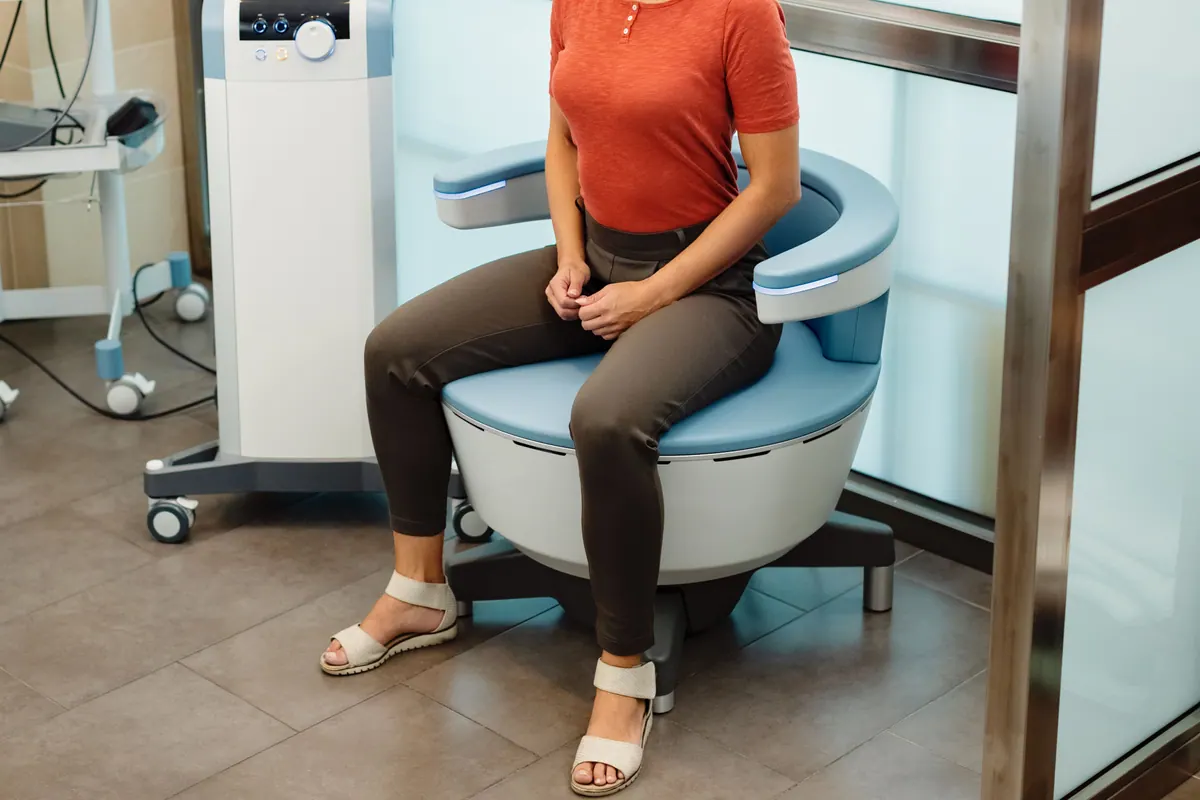
The effects listed for the chair are muscular and local. The FDA’s 510(k) summary for the device behind EmSella says treatment “may be accompanied by various side effects such as muscular pain, temporary muscle spasm, temporary joint or tendon pain, temporary increase of local circulation, increased sensitivity during intercourse, and local erythema or skin redness”.
In plain terms, you may notice:
- Sore pelvic or buttock muscles the next day, like the ache after an unfamiliar workout
- Tingling in the pelvis and upper thighs during the session, which stops when the field stops
- Twitching or a short spasm in the muscles that were stimulated
- Achy hips or lower back, from tendons and joints near the muscles that contract
- Warmth or pinkness of the skin where you sat
- More sensitivity during sex for a while after a course
These effects relate to the muscles being worked hard. The device does not involve needles, anesthesia or anything placed inside the body.
How often do side effects happen in the studies?
Reported problems have been few, but the studies are small. In a 2019 multicenter study of 75 women given six sessions, the team watched for muscle pain, spasm, joint or tendon pain and skin redness, and the women reported no pain, downtime or adverse events. A 2024 study of 35 women using the same protocol reported mild, transient side effects that resolved without treatment. A 2025 meta-analysis of seven studies noted that no safety issue was highlighted in most of them.
Small study sizes mean an uncommon problem could be missed: a side effect affecting one woman in 500 could easily go unseen in a group of 75. The two Emsella studies above also followed women for only three months and one month, which is one reason the screening questions matter.
Who should not have Emsella treatment?
The exclusions follow from how the device works. The 510(k) summary lists a magnetic field intensity of 0.7 to 2.5 tesla, so implants and conditions that were never tested near that field are screened out. The lists below come from the published studies and from our clinic’s own candidate rules.
| Situation | Listed as an exclusion in |
|---|---|
| Pregnancy, or trying to conceive | All three study protocols cited here; the 2019 study also tested for pregnancy before enrollment and before each later session |
| Pacemaker or other implanted electronic device | The 2024 study; the randomized trial protocol for a related magnetic chair; our candidate rules |
| Metal implants near the pelvis or spine | The 2019 study (metal implants); the 2024 study (metal implants in the spinal cord); our candidate rules (near the pelvis) |
| A recent operation | The 2019 study |
| Fever or acute infection | The 2024 study (fever); the related chair protocol (acute severe infections) |
| Tumors | The 2024 study |
| Blood circulation disorders | The 2024 study |
The 2019 study also excluded anyone with “any contraindication listed in the investigational device manual”, so the manufacturer’s manual remains the final checklist your clinician uses.
What should you tell the clinician before a first session?
Screening takes a few minutes if you arrive prepared. Bring or be ready to describe:
- Every implant: pacemaker, defibrillator, nerve stimulator, insulin pump, joint replacement, spinal hardware, surgical clips or mesh.
- Your contraception, including the type of IUD if you have one.
- Whether you could be pregnant, or are trying.
- Recent surgery of any kind, with dates.
- Pelvic pain or pain with sex, which can point to muscles that are overactive instead of weak.
- Current urinary symptoms such as burning, fever or blood, which need to be checked first.
If your main symptom is pain or a sense of tightness, stimulation that adds more contractions may not be the right tool. Our comparison of Emsella and Kegel exercises explains when exercise-based training is the better fit, and the guide to incontinence treatment without surgery lays out the other options for women who are excluded.
Can Emsella make pelvic pain or tightness worse?
No trial has tested the chair in women whose main problem is an overactive, tight pelvic floor, so there is no direct evidence either way. The concern is logical rather than measured. The Office on Women’s Health notes that some women have urinary symptoms because their pelvic floor muscles are always tightened, and that for them Kegel exercises will not help and may cause more problems. A device that produces thousands of strong contractions raises the same question.
That is why pain with sex, pain during pelvic exams, trouble starting your stream or constipation with straining should be mentioned before treatment. Those symptoms point the plan toward relaxation-focused therapy first.
What does a session feel like, and when should you stop?
You sit fully clothed on the chair for about 28 minutes. Most women feel tingling and strong, rhythmic squeezes of the pelvic floor and buttocks, and the operator raises the intensity only as far as you can tolerate, as the 2024 study describes. You can read or use your phone. Afterward you can drive and return to normal activity.
Tell the operator immediately if you feel sharp pain, numbness that does not fade, or anything that feels wrong, and the session can be paused or turned down. Soreness that lasts more than a few days, or new pelvic pain after a course, is worth a call to the clinic.
How we screen for Emsella at our clinic
Before any course, a provider reviews your health history, medicines and implants, examines the pelvic floor and tissue, and checks a urine sample. That visit happens in person at San Gabriel or Downey, since the exam cannot be done remotely. If the chair is not safe or suitable for you, the plan moves to supervised exercise, vaginal estrogen after menopause, or referral to pelvic floor physical therapy instead.
You can read about the pelvic floor program and its candidate requirements, browse more answers on pelvic health, or use the symptom assessment when you cannot tell whether leaking or pain matters more. Start with the free ten-minute phone call; after examining you, a provider talks through whether the chair suits you. Book a consultation when that suits you.
