Lab test · Preventative labs
DHEA-S Levels in Women: Normal Range and What It Shows
Short answer
DHEA-S (dehydroepiandrosterone sulfate) is an androgen made mostly by the adrenal glands. In women it falls steadily with age, from about 45 to 320 µg/dL in the 20s to under 145 after 59, per MedlinePlus, with ranges varying by lab. It is measured mainly to work up excess hair, acne or irregular periods. A low value that matches your age is expected and is not a reason to take DHEA.
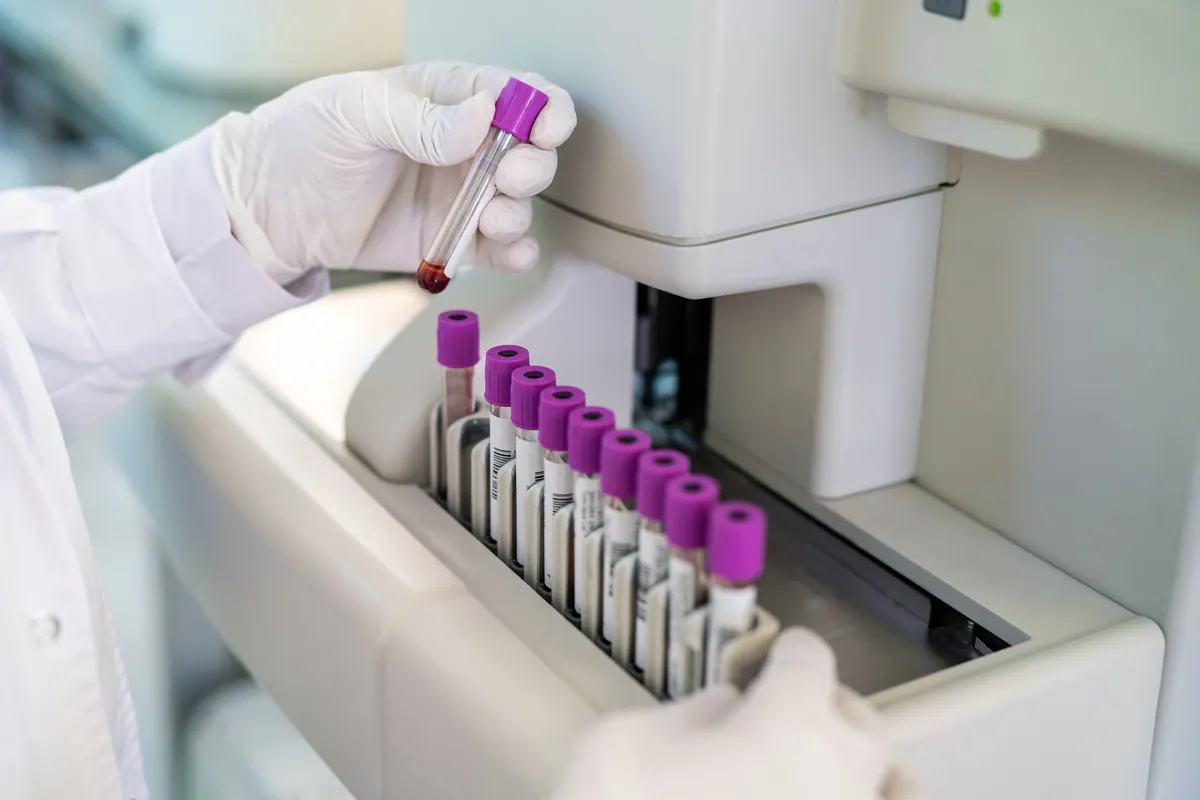
What does a DHEA-S test measure?
It measures dehydroepiandrosterone sulfate, a weak androgen that comes mostly from the adrenal glands above the kidneys. The MedlinePlus encyclopedia notes that the adrenal glands are one of the major sources of androgens in women, and that DHEA-S is the most abundant hormone in the body even though its exact function is still not known. Because it is made mostly in the adrenal glands, DHEA-S is used as a marker of adrenal androgen output.
No special preparation is needed. Tell the lab about any supplement containing DHEA, since it raises the result.
What are normal DHEA-S levels for women?
DHEA-S ranges are set by age, because the hormone falls so predictably across adult life. MedlinePlus lists these typical female ranges and notes that they vary slightly between laboratories:
| Age | µg/dL | µmol/L |
|---|---|---|
| 18 to 29 | 45 to 320 | 1.2 to 8.7 |
| 30 to 39 | 40 to 325 | 1.1 to 8.8 |
| 40 to 49 | 25 to 220 | 0.7 to 6.0 |
| 50 to 59 | 15 to 170 | 0.4 to 4.6 |
| Over 59 | Less than 145 | Less than 3.9 |
Each band is wide. A 52-year-old at 30 µg/dL and one at 160 µg/dL both fall inside the expected range, so the number matters mainly when it sits well outside your age band or does not fit the rest of your hormone results.
When is DHEA-S worth testing?
It is worth testing when there are signs of androgen excess and the cause is not yet clear. MedlinePlus lists the signs that prompt the test in women: excess facial and body hair, a deepening voice, irregular periods, acne, becoming very muscular and thinning hair on the crown of the head.
The 2023 international PCOS guideline places DHEA-S second in line. It recommends total or free testosterone first and suggests that clinicians could consider DHEA-S and androstenedione when testosterone is not elevated, noting their poorer specificity and the larger age-related fall in DHEA-S. It also asks laboratories to use tandem mass spectrometry for these androgens where possible. Our page on testosterone levels in women covers the first-line test.
What does a very high DHEA-S mean?
A clearly high result points to the adrenal glands and needs a prompt, organized follow-up. MedlinePlus lists the main causes of an increase:
- Congenital adrenal hyperplasia, a common inherited enzyme disorder
- A tumor of the adrenal gland, which can be benign or cancerous
- Polycystic ovary syndrome, a common condition in women younger than 50
- Early puberty in girls
Because an adrenal tumor is on that list, a markedly high value is followed up promptly rather than rechecked in a year, usually by an endocrinology team. Tell your clinician how quickly any new hair growth or voice change appeared, since the timeline helps decide how urgent the next step is.
What does a low DHEA-S mean?
Usually nothing beyond your age. MedlinePlus notes that DHEA levels normally decline with age in women and men. A value below your age band can reflect adrenal insufficiency, including Addison disease, a pituitary gland that is not making enough of its hormones, or glucocorticoid medicines such as prednisone.
Low DHEA-S is not a reason to start a supplement. MedlinePlus states there is no reliable evidence that DHEA supplements prevent aging-related conditions and warns they may cause serious side effects. The Endocrine Society’s guideline on androgen therapy in women recommends against routine DHEA use, citing limited data on effectiveness and safety in healthy women and in those with adrenal insufficiency, and against treating low androgen levels in conditions such as surgical menopause or hypopituitarism without better evidence.
Tiredness is the symptom most often blamed on the adrenal glands. The Endocrine Society’s patient page on adrenal fatigue points instead toward adrenal insufficiency, depression or sleep apnea as diagnoses worth ruling out, and the TSH levels page covers the thyroid side of that search.
Is DHEA-S on our women’s lab panel?
Our women’s preventative labs do not list DHEA-S. The panel’s androgen section is total testosterone with SHBG, measured alongside estradiol, progesterone and FSH. If you have excess hair, acne or irregular cycles and your testosterone result does not explain them, ask your clinician whether DHEA-S should be added; a markedly high value is handled by referral to endocrinology.
Bring a list of any supplements you take, especially anything sold for energy, aging or the adrenal glands, to the free ten-minute call. Wondering whether your symptoms are an androgen question at all? The online assessment is a reasonable first step.
Panel markers are collected on the day you visit San Gabriel or Downey, and a provider goes over them with you, face to face or on video, once they arrive a day or two later. The visit evaluates what is causing your symptoms rather than starting from a treatment. Book a consultation or browse the women’s lab test pages.
