Comparison · Testosterone for women
Testosterone Cream vs Pellets for Women: Dose and Risk
Short answer
For women, testosterone creams and gels are the form guidelines support, because the dose can be lowered quickly if blood levels or side effects call for it. Pellets are implanted under the skin, release hormone for months and cannot be reduced once placed, and the 2019 international consensus advises against them because they can produce levels above the female range. Neither form is FDA-approved for women.
Which form suits which woman?
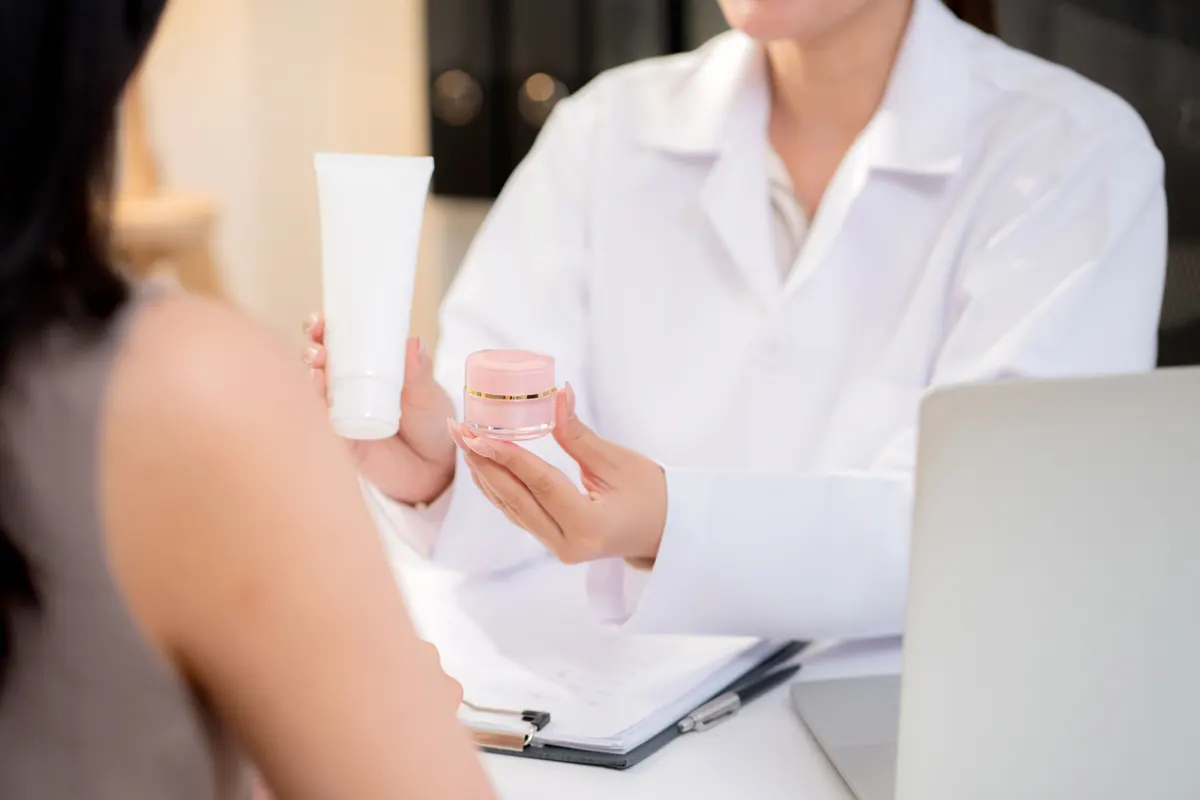
A cream or gel suits most women considering testosterone, because it can keep levels in the female range and be turned down quickly. Pellets are much harder to fit to current guidance: their main advantage is convenience, and it comes at the cost of control. The Global Consensus Position Statement recommends against any testosterone preparation that produces above-range levels, naming pellets and injections, and its finding of benefit for low desire does not apply to them.
A woman who strongly prefers not to apply anything daily, and who accepts the trade-offs below, may still hear about pellets. The fair summary is that pellets trade away the ability to fine-tune, which is the main safety tool in female testosterone care, in exchange for not having to apply anything.
How do the two forms compare side by side?
| Cream or gel on the skin | Pellet under the skin | |
|---|---|---|
| How it is given | Small daily amount rubbed into the skin | Implanted under the skin in a clinic procedure, lasts months |
| Adjusting the dose | Can be lowered or raised within days | Cannot be reduced once placed |
| Blood levels | Can be kept in the premenopausal range | May rise above the female range |
| Products used | A men’s approved gel at about a tenth of the dose, or a compounded cream | Compounded pellets, or the men’s approved pellet used off-label |
| FDA-approved for women | No | No |
| Daily effort | Yes, every day | None between implants |
| Skin transfer to others | Possible; precautions needed | Not from the skin surface |
| Procedure risks | No procedure | Infection or pellet coming out at the implant site |
| Guideline position | Transdermal is the preferred form | Not recommended |
| At our clinic | Used, with blood levels checked | Generally avoided |
Sources for each row appear in the sections below.
How does each form work?
A cream or gel delivers testosterone through the skin into the bloodstream each day. The ISSWSH clinical practice guideline calls transdermal treatment “the most physiological form of replacement therapy for women,” whether given as patch, gel, cream or spray. When no women’s product is available, ISSWSH supports using an approved men’s gel at about one-tenth of the male dose; the female dose explainer shows where that fraction comes from.
A pellet is crystalline testosterone implanted under the skin, where it dissolves slowly. The Testopel label, the FDA-approved pellet for men, describes slow release “for a long acting androgenic effect” and warns that pellet implantation “is much less flexible for dosage adjustment” than other forms, so great care is needed when estimating the amount.
What are the risks of each?
The central pellet risk is overshooting the female range with no way back. ISSWSH says implants may produce supraphysiological levels, do not allow dose titration, and occasionally yield markedly elevated levels with erratic release, plus difficulty locating them for removal. At above-range levels, testosterone can cause acne, excess facial hair, scalp thinning and voice deepening.
The pellet procedure carries its own risks. The Testopel label reports implant site infection and pellets pushing out through the skin, with bruising, bleeding, drainage, pain and itching.
Creams and gels have different problems. Testosterone left on the skin can transfer to children, female partners and pets through close contact, which ISSWSH says patients must be counseled about. Measuring a tenth of a men’s dose is fiddly, and compounded creams may vary in strength.
Compounded or approved: does it matter?
It matters for both forms. Under the FDA’s compounding questions and answers, a compounded drug has no FDA approval, which means the agency checks neither its safety, its effectiveness nor its quality before you receive it. ISSWSH adds that compounded testosterone may vary in concentration, whereas manufactured men’s products go through government quality inspection.
The Menopause Society’s 2022 hormone therapy position statement describes compounded “bioidentical” hormone products as often using untested combinations or nonstandard routes, naming subdermal implants and pellets. A compounded cream is not ideal either; the consensus statement accepts one only when no authorized equivalent is available and the pharmacy meets manufacturing-quality standards.
What are the practical differences day to day?
With a cream or gel, the daily routine is a few minutes: measure, apply to the skin site your clinician names, let it dry, wash your hands, and keep the area covered from close contact until it is washed. Our step-by-step guide to applying testosterone cream covers sites, drying time and protecting others. Changes are fast: if a blood test runs high, ISSWSH advises a lower dose and a repeat test in two to three weeks.
With pellets, there is nothing to remember between visits, but a level that runs high, or acne and hair growth that appear, have to wait out the pellet. Cost also behaves differently: a cream is a recurring pharmacy cost, while a pellet combines the drug and the procedure in one visit. The cost breakdown for testosterone in women lists each component.
How does a clinician help you choose?
A good clinician starts with whether testosterone is right at all. The consensus statement supports it only for postmenopausal women with distressing low desire after a full assessment, and asks for a baseline level, a recheck three to six weeks after starting, and stopping when six months bring no benefit.
From there the choice of form follows the evidence: transdermal, female-range, measured. Questions worth asking any clinician who suggests a form:
- What blood level are you aiming to stay under, and when will you check it?
- What happens if my level runs high or I get acne or new facial hair?
- Is this product FDA-approved for any use, or compounded?
- How will we decide whether to stop?
If you are still deciding whether testosterone fits your symptoms at all, try the quick symptom assessment; more side-by-side comparisons are in the compare library.
How our clinic decides between forms
Our providers use low-dose cream or gel for women and generally avoid pellets, because doses cannot be reduced once placed and levels often run well above the female range. Before a first dose there is a baseline total testosterone and SHBG, and a blood level follows at six to eight weeks so the amount can be fine-tuned.
The trial runs three to six months and continues only if it helps; the testosterone for women page sets out the plan. It begins with the free ten-minute call, followed by a blood draw at San Gabriel or Downey and a provider visit there or by video. You can book a consultation to talk it through.
