Answer · Pelvic floor
Pelvic Floor After a C-Section: Do You Still Need Rehab?
Short answer
Possibly. A cesarean roughly halves the risk of stress leaks compared with vaginal birth, but pregnancy itself loads the pelvic floor, so the risk does not disappear: in one cohort, 17.5% of the women who had only cesareans developed stress incontinence within 15 years. Leaks, heaviness, pain or trouble holding gas after recovery are reasons to get assessed and treated.
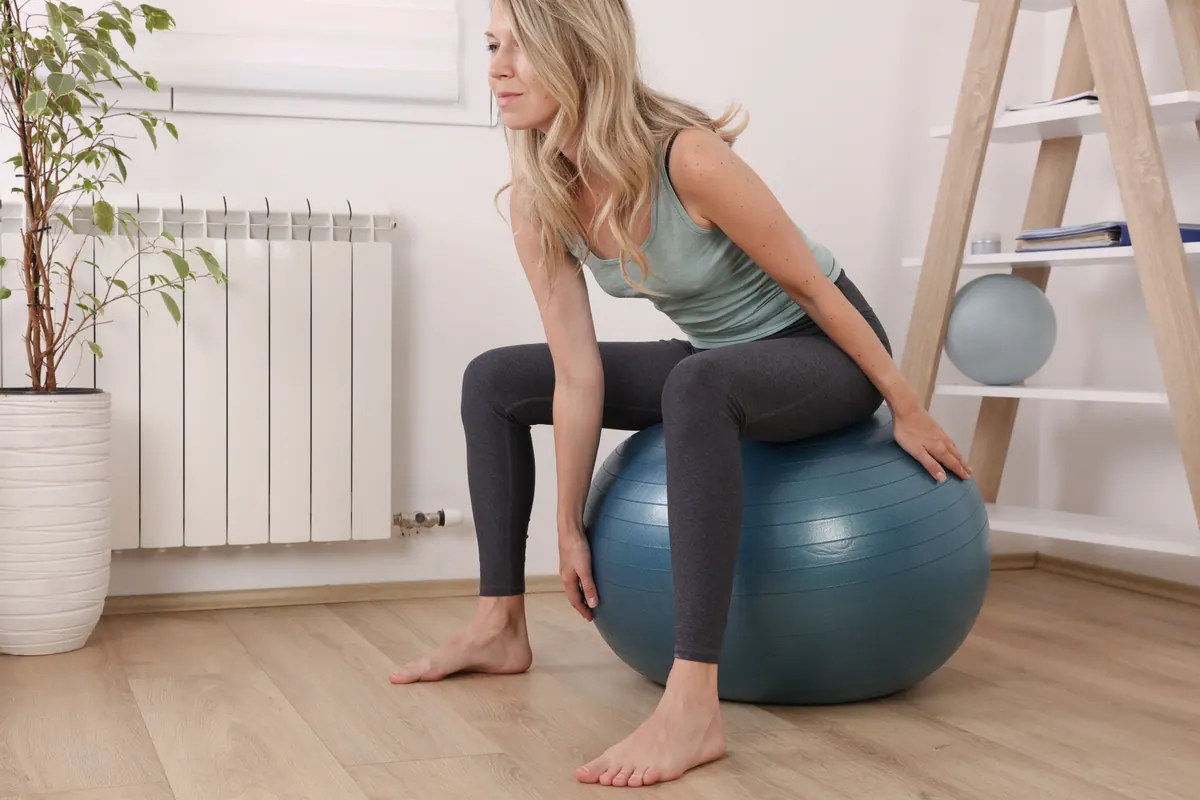
Do you still need pelvic floor rehab after a C-section?
Formal rehabilitation is for women with symptoms; for everyone else, a simple home routine of pelvic floor squeezes is a reasonable habit after any birth. A cesarean protects the pelvic floor from the stretch of a vaginal delivery, so the risk of leaks and prolapse is lower, but the months of pregnancy before it still put weight and strain on the same muscles. “Lower risk” is not “no risk”, and the numbers below show how big the difference is.
Whether you need more than a home routine depends on symptoms. Leaks, a feeling of heaviness, pain with sex, or trouble holding gas or stool are signs to get assessed rather than wait.
Why does pregnancy itself strain the pelvic floor?
The load starts long before delivery. The Office on Women’s Health explains that as the baby grows, it pushes down on the bladder, the urethra and the muscles beneath them, and that this pressure over time may weaken those muscles. As many as 4 in 10 women leak urine during pregnancy, which means many women who go on to have a cesarean have already had leaks before the birth.
The route of delivery does not undo that load, which is why a planned cesarean is not a promise of a symptom-free pelvic floor.
How much does a cesarean lower the risk?
The clearest long-term data come from a cohort of 1,528 women recruited 5 to 10 years after their first birth and followed yearly. The estimated share who developed each problem within 15 years of a first delivery:
| Pelvic floor problem | Cesarean births only | Spontaneous vaginal births |
|---|---|---|
| Stress urinary incontinence | 17.5% | 34.3% |
| Overactive bladder | 14.6% | 21.8% |
| Anal incontinence (gas or stool) | 25.8% | 30.6% |
| Pelvic organ prolapse | 9.4% | 30.0% |
After adjusting for other factors, cesarean delivery was linked to a significantly lower hazard of stress incontinence (hazard ratio 0.46), overactive bladder (0.51) and prolapse (0.28). Anal incontinence was not among the outcomes significantly reduced, which is worth knowing if you have trouble controlling gas.
Early leaks follow the same pattern. A systematic review of population studies found the average prevalence of leaking in the first three months was 15% after cesarean and 31% after vaginal delivery.
Does it matter if you have had both kinds of birth?
Yes, and this is where the protection can disappear. In a 12-year follow-up of 3,763 women, the odds of persistent leaks were lower for women whose births were all cesareans than for women whose births were all vaginal (odds ratio 0.42). Women who had a mix of cesarean and vaginal births had no lower risk (odds ratio 1.01).
So the answer differs by history. A woman with one or two cesareans and no vaginal births starts from a lower baseline. A woman who had a vaginal birth first and a cesarean later, or the other way round, should think of her risk as similar to vaginal birth alone. Older age at first birth, more births and carrying extra weight were each linked to persistent leaks in the same study.
What about the scar and your core muscles?
The incision is a healing wound in the abdominal wall, and the abdominal muscles work with the pelvic floor to manage pressure when you cough, lift or strain. ACOG notes that the abdomen takes a few weeks to heal, that pain or numbness around the incision is common during recovery, that nothing should go in the vagina and sex should wait for a few weeks, and that you should allow time to heal before any strenuous activity.
For exercise, ACOG’s guidance on activity after pregnancy says that after a cesarean or complications you should ask your ob-gyn when it is safe to start. Its general advice is to begin with simple exercises and add moderate-intensity activity gradually, which after a cesarean often looks like this:
- Gentle breathing and pelvic floor squeezes while lying down, once comfortable.
- Short walks that lengthen over the following weeks.
- Core and strength work only after your obstetric clinician clears you.
- Higher-impact exercise such as running or jumping later, once you can do it without leaking, heaviness or pain.
Numbness or tenderness at the scar that has not improved after several months, or pain that pulls when you engage your core, is worth raising at a postpartum check.
When should you get your pelvic floor assessed?
Get a pelvic floor assessment if, after the early recovery weeks, you notice any of these:
- leaks with coughing, laughing, lifting or exercise
- sudden urges or frequent trips that are new since pregnancy
- a bulge or heavy, dragging feeling, especially by evening
- pain with sex or with inserting a tampon
- trouble holding gas or stool
Prolapse is less likely after cesarean but not impossible. The Office on Women’s Health page on prolapse states that it can happen even with a cesarean delivery or no children; our page on pelvic organ prolapse covers symptoms and stages. If you are not sure whether what you feel is weakness, the list in our page on weak pelvic floor symptoms can help, and the symptom assessment is another place to start.
Pain, scar tightness and difficulty relaxing the muscles usually point toward a pelvic floor physical therapist rather than a strengthening device; the Emsella versus physical therapy comparison sets out the reasoning.
How we assess the pelvic floor after a cesarean
We do not offer obstetric care, so your obstetric clinician handles your recovery from surgery and clears you for exercise. After that, a provider at our clinic can look at the pelvic floor itself: how well the muscles squeeze, lift and relax, whether there is any prolapse, and whether bladder or bowel symptoms need further testing. The exam happens in person at San Gabriel or Downey.
If weakness is the issue, the plan may include a home routine taught properly and, once you are well healed and not pregnant, the EmSella chair. If pain or tension is present, we refer you to pelvic floor physical therapy first. Learn more on the pelvic floor treatment page or in our other answers about pelvic health. A short free phone call of about ten minutes is the first step, and a consultation follows if it makes sense. Book a consultation when your obstetric clinician has cleared you.
