Medication guide · Bioidentical hormones
Estradiol Patch: Strengths, How to Apply It, Side Effects
Short answer
An estradiol patch is an FDA-approved skin patch that releases bioidentical estradiol steadily into the bloodstream. Twice-weekly brands such as Vivelle-Dot come in strengths from 0.025 to 0.1 mg a day, and weekly brands such as Climara add a 0.06 mg option. It treats hot flashes and vaginal dryness and helps prevent bone loss; a woman with a uterus also needs a progestogen.
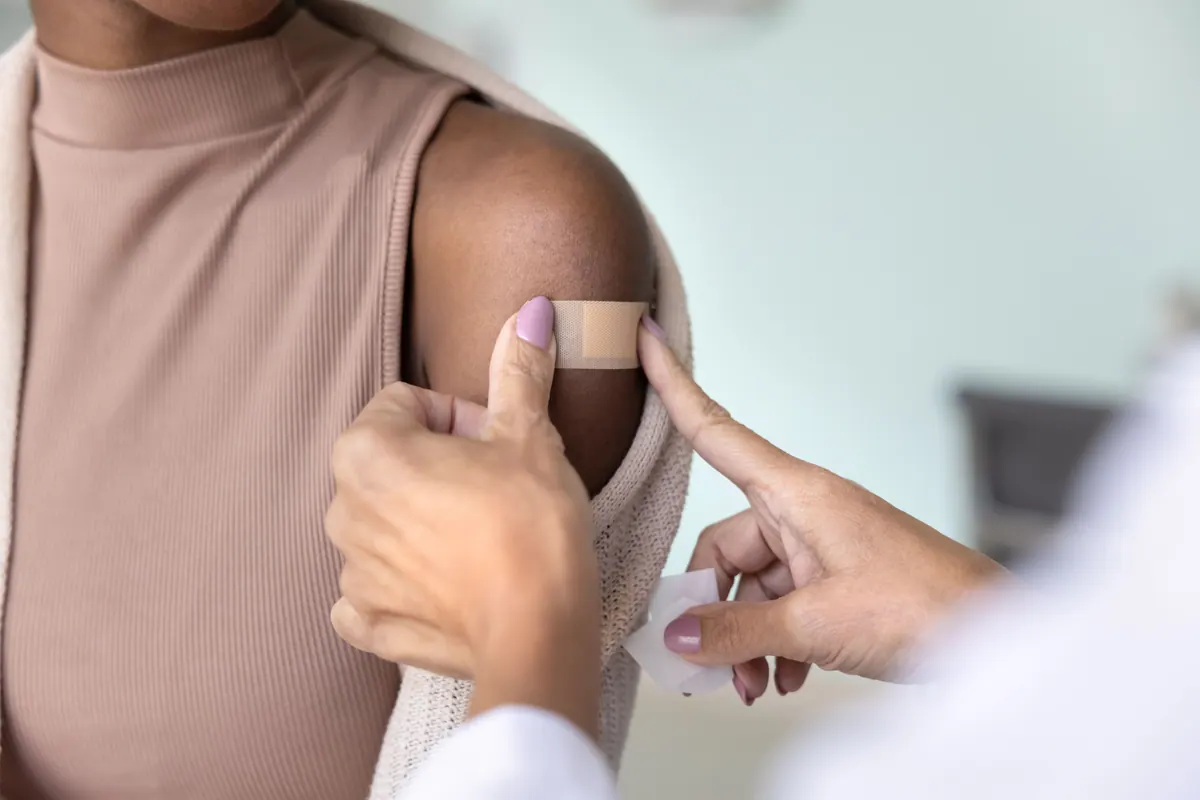
What the estradiol patch is and how it works
An estradiol patch is a thin adhesive square that holds estradiol, the main estrogen your ovaries made before menopause, and releases it through the skin at a set rate each day. MedlinePlus describes it as an estrogen hormone that works by replacing the estrogen the body no longer produces. Because the hormone enters the bloodstream directly, it avoids the first pass through the liver that a pill takes.
Patches are labelled for moderate to severe hot flashes and night sweats, for vaginal and vulvar dryness, for low estrogen from early ovarian failure or removal, and for preventing bone loss after menopause. For dryness alone, the label points first to vaginal products, and for bone protection alone, to non-estrogen medicines.
FDA status and which labels have changed
The patch is FDA-approved, with brand and generic versions. Drugs@FDA records the original approval of the application behind Vivelle-Dot on 31 July 1996. The Vivelle-Dot label, revised in October 2026, now carries one boxed warning: endometrial cancer from estrogen used without a progestogen in a woman with a uterus.
Not every patch label has caught up. The FDA’s list of hormone products with updated labeling includes Vivelle, Vivelle-Dot and Minivelle, while the Climara label on DailyMed, last revised in December 2023, still shows the older box covering heart disease, dementia and breast cancer as well.
Strengths and schedules: twice-weekly versus weekly brands
Patches differ by how often you change them and which strengths exist. Your clinician sets the dose.
| Vivelle-Dot (twice weekly) | Climara (once weekly) | |
|---|---|---|
| Strengths, mg of estradiol per day | 0.025, 0.0375, 0.05, 0.075, 0.1 | 0.025, 0.0375, 0.05, 0.06, 0.075, 0.1 |
| Usual labelled starting dose for hot flashes | 0.0375 mg | 0.025 mg |
| Where to place it | Clean, dry skin of the trunk, including the abdomen or buttocks | Lower abdomen below the navel, or upper buttock |
| Never place it | On the breasts | On the breasts |
The Menopause Society position statement adds that an even lower weekly patch, 0.014 mg a day, is FDA-approved only for preventing osteoporosis, although it appears to ease hot flashes too.
How to apply it, rotate it and handle one that falls off
The labels and MedlinePlus give the same basic routine:
- Pick clean, dry, cool skin with no lotion, oil, powder or irritation. Avoid the waistline, where tight clothing can rub the patch off.
- Tear the pouch open with your fingers rather than scissors, which can damage the patch, and apply it straight away.
- Press it down with your palm for about 10 seconds, then run a finger around the edges.
- Change it on the same day or days every week, and move to a new site each time, leaving at least a week before reusing a spot.
- When removing it, peel slowly. Fold the used patch in half so it sticks to itself, because it still contains some hormone, and keep it away from children and pets. Leftover adhesive comes off after 15 minutes with an oil-based cream or lotion.
If a Vivelle-Dot patch falls off, reapply it or put a new one on another site and keep your original change schedule. If you forget a change, apply a new patch as soon as you remember and go back to your usual days; the label notes that gaps can cause spotting and returning symptoms.
What the trials showed
The labels report fast relief at standard doses. In two controlled trials of Vivelle, which is bioequivalent to Vivelle-Dot, the 0.075 and 0.1 mg strengths beat placebo for hot flashes by week 4 and kept working through week 12. In the first study, the 0.0375 and 0.05 mg strengths did not separate from placebo until about week 6, so a separate 12-week trial in 255 women, who averaged 11.5 hot flashes a day, confirmed that 0.0375 mg works by week 4.
For bone, the label describes a 2-year placebo-controlled trial in 261 women within 5 years of menopause, which underpins the 0.025 mg starting dose for preventing bone loss. The label reports that all strengths from 0.0375 mg upward control hot flashes.
Side effects, warnings and who should not use it
The most common side effects in the Vivelle-Dot label, each in at least 10 percent of users, are headache, breast tenderness, cold and sinus symptoms, back pain, depression and irregular bleeding or spotting. Redness or irritation under the patch occurred in 3.2 percent of patients or fewer. Climara’s most common effects include breast pain, headache, abdominal pain and swelling. A fuller list of early effects is on our page about HRT side effects.
The current label lists these contraindications:
- Vaginal bleeding without a known cause
- Breast cancer now or in the past, or another estrogen-dependent cancer
- A current or past clot in a leg or lung, a stroke or heart attack
- Liver disease or impaired liver function
- Protein C, protein S or antithrombin deficiency, or another known clotting disorder
- A past allergic reaction or angioedema with the patch
The label also advises stopping, where feasible, 4 to 6 weeks before surgery linked to clots, and warns that estrogens raise the risk of gallbladder disease and can worsen asthma, diabetes, epilepsy, migraine, lupus and porphyria. MedlinePlus lists the warning signs that need an immediate call: sudden severe headache or vomiting, trouble speaking, vision loss, weakness or numbness in an arm or leg, crushing chest pain, coughing up blood, sudden breathlessness, or pain, tenderness or redness in one leg. For chest pain, one-sided weakness, slurred speech or sudden vision loss, call 911.
Interactions and monitoring
Some medicines change how fast estrogen is broken down. The Climara label names St. John’s wort, phenobarbital, carbamazepine and rifampin as able to lower estrogen levels, and erythromycin, clarithromycin, ketoconazole, itraconazole, ritonavir and grapefruit juice as able to raise them. Tell your clinician about every medicine and supplement you take.
Monitoring is mostly clinical. The Vivelle-Dot label says blood levels of FSH and estradiol have not been shown to help manage hot flashes, so the dose is adjusted by how you feel. It does advise thyroid checks for women on thyroid hormone, breast exams and mammograms, prompt evaluation of unexplained bleeding, and periodic review of whether treatment is still needed.
Is the estradiol patch available at our clinic?
Yes. The estradiol patch is one of the FDA-approved forms of estradiol on our bioidentical hormone therapy page, alongside gel, spray and tablets, with micronized progesterone for women with a uterus. Before suggesting a brand and strength, a provider goes over your symptoms, history and lab results, then checks in between week six and week twelve.
Unsure whether a patch or another form suits you? Our patch versus pill comparison and patch versus gel comparison cover the trade-offs, our online assessment helps you organize your history, and other medicines are on the medications hub. The first step costs nothing: a ten-minute phone call. Labs and a one-to-one consultation follow, at San Gabriel, at Downey or over video. Book a free consult when you would like to start.
