Condition · Perimenopause
Iron Deficiency From Heavy Periods: Signs and Treatment
Short answer
Heavy periods are one of the most common causes of iron deficiency in women, and iron stores can run low long before a blood count shows anemia. Signs include tiredness, breathlessness, restless legs, poor concentration and craving ice. A ferritin test, usually with a complete blood count, confirms it. Treatment means replacing iron, often with oral iron daily or on alternate days, and reducing the bleeding.
How do heavy periods cause iron deficiency?
Every period costs iron, because iron sits inside the hemoglobin of red blood cells. When periods are heavy month after month, you lose more iron than food usually replaces. A 2025 review in JAMA names bleeding, including menstrual bleeding, among the most common causes of iron deficiency, and estimates that in high-income countries about 38% of nonpregnant women of reproductive age have iron deficiency without anemia, while about 13% have iron-deficiency anemia.
The two terms matter. Iron deficiency means your stores are low. Iron-deficiency anemia means stores have run down far enough that hemoglobin has fallen too. The JAMA review describes a progression from low stores to anemia, and notes that people at either stage can have symptoms.
In perimenopause, heavier periods are common, so this is a frequent combination in women in their 40s. ACOG defines heavy bleeding in concrete terms: periods lasting more than 7 days, soaking protection every hour for several hours, needing to change pads overnight, or passing clots the size of a quarter. If any of those describe your periods, your iron is worth checking.
What does low iron feel like, with or without anemia?
Often like being run down for no clear reason. The symptoms build slowly, which makes them easy to blame on stress, age or poor sleep.
| Symptom | What the sources report |
|---|---|
| Fatigue and weakness | The most common symptoms, per the Office on Women’s Health |
| Irritability, low mood, trouble concentrating | Listed in the 2025 JAMA review for iron deficiency with or without anemia |
| Restless legs | An urge to move the legs at rest; reported in 32% to 40% of people with iron deficiency (JAMA) |
| Pica, including craving ice | Unusual cravings for ice, very cold drinks or non-food items; 40% to 50% (JAMA) |
| Shortness of breath, exercise intolerance | Worse on stairs or during workouts |
| Dizziness, headaches, cold hands and feet | Listed by NHLBI and OWH |
| Pale skin, brittle nails, fast or irregular heartbeat | Listed by OWH |
Heavy periods account for a real share of anemia: the Office on Women’s Health puts the figure at as many as 1 in 20 women of childbearing age. It also points out that anemia often develops slowly, with mild or no symptoms at first, so feeling fine does not rule it out. When hair thinning is part of the picture, our clinic includes iron in the lab work as well.
How is iron deficiency tested?
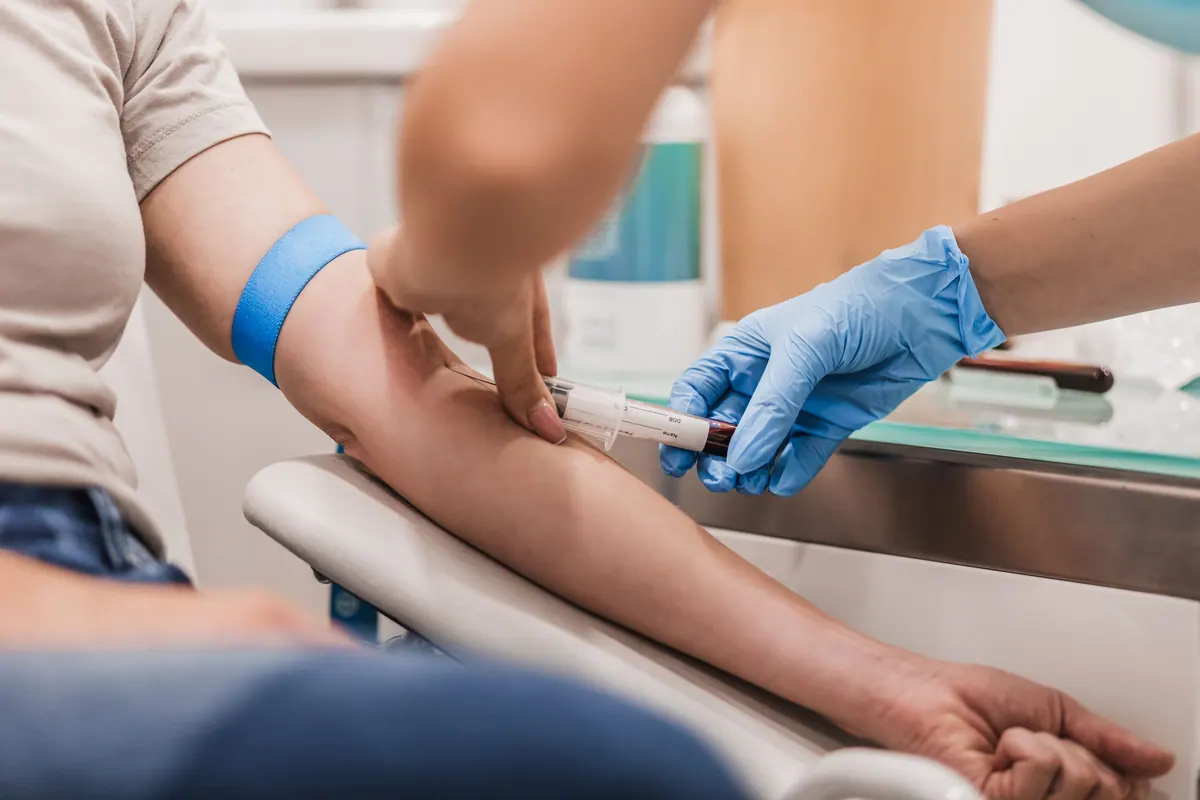
With a ferritin test and a complete blood count, ideally together. MedlinePlus explains that ferritin is a protein that stores iron, so a ferritin level shows how much iron you have in reserve. A complete blood count measures red blood cells, hemoglobin, hematocrit and the average size of red cells, which together show whether anemia is present.
The JAMA review states that iron deficiency is diagnosed by a low serum ferritin, typically below 30 ng/mL in people without inflammatory conditions, or by a transferrin saturation below 20%. Reference ranges and cut-offs vary between labs and assays, so your results are read against the range your lab reports.
Two cautions apply:
- Inflammation raises ferritin. MedlinePlus lists inflammation from infection or surgery among causes of higher ferritin, so a “normal” ferritin during an illness can hide low stores.
- Testing is worth asking for. The JAMA review says testing is indicated for anemia or symptoms such as fatigue, pica or restless legs, and should be considered for people with heavy menstrual bleeding.
Our women’s lab panel includes ferritin, iron studies and a complete blood count.
How is iron replaced?
Usually with oral iron first, chosen and dosed by your clinician. The JAMA review describes oral iron, such as ferrous sulfate 325 mg a day or on alternate days, as typical first-line therapy for most people.
The alternate-day idea comes from absorption research. In two randomized trials published in The Lancet Haematology, women aged 18 to 40 with low iron stores (ferritin of 25 μg/L or less) took labeled iron supplements. Giving 60 mg on alternate days for 28 days led to more total iron absorbed than giving it on 14 consecutive days (175.3 mg versus 131.0 mg), and splitting a dose into two daily portions raised hepcidin, a hormone that blocks absorption. The authors suggest alternate-day single doses may be preferable but say the findings still need confirming in women who are already anemic.
The National Heart, Lung, and Blood Institute adds practical points:
- Oral iron often takes three to six months to restore iron levels.
- Side effects can include a metallic taste, nausea, diarrhea, constipation and upset stomach; your clinician may suggest taking it with food, lowering the dose or trying another form.
- Intravenous (IV) iron can restore levels in one or a few sessions and is more likely to be used for serious anemia or long-term conditions.
OWH notes that vitamin C helps the body absorb iron, and suggests taking iron with a food or drink rich in vitamin C.
The JAMA review lists the situations where IV iron is indicated, including intolerance of oral iron, poor absorption and ongoing blood loss. Our clinic does not offer IV iron; when it is needed, it is arranged by referral.
Why does the bleeding have to be treated too?
Because iron poured in at one end drains out the other. If heavy periods continue, stores refill slowly or not at all. ACOG describes medicines that are usually tried first for heavy bleeding, including hormonal birth control, hormone therapy in perimenopause, tranexamic acid and NSAIDs, with procedures considered when medicines are not enough. For the full menu of bleeding treatments, and which of them we provide, see heavy periods in perimenopause.
Irregular cycles can make heavy bleeding unpredictable as well. Our guide to irregular periods in perimenopause helps separate expected changes from ones to report.
Emergency signs. Bleeding that fills protection each hour for two hours or more, or bleeding with a faint, calls for emergency care. Call 911 for chest pain, severe shortness of breath or fainting.
How our clinic treats iron loss from heavy periods
We measure it, replace it and address the bleeding behind it. Start with the free ten-minute call; the visit that follows covers your bleeding pattern, diet, symptoms and any past iron treatment. Ferritin, iron studies and a complete blood count are drawn the same day, and a provider goes over each result with you once it is back, usually within two days.
From there, iron correction and a plan for the bleeding go together. Our perimenopause care includes iron correction alongside progesterone schedules, low-dose estradiol and cycle control options, and we refer when IV iron, imaging or a procedure is needed. The symptom assessment can show whether other symptoms belong in the same conversation. Related topics are collected under conditions. To get your iron checked, book a consultation.
