Condition · Thyroid care
Hashimoto's Disease: Symptoms, Antibodies and Treatment
Short answer
Hashimoto's disease is an autoimmune condition in which antibodies and immune cells slowly damage the thyroid. It is 4 to 10 times more common in women and often begins between ages 30 and 50. Positive TPO antibodies with a normal TSH call for monitoring rather than treatment; levothyroxine starts once the thyroid becomes underactive, and its dose follows TSH, not the antibody level.
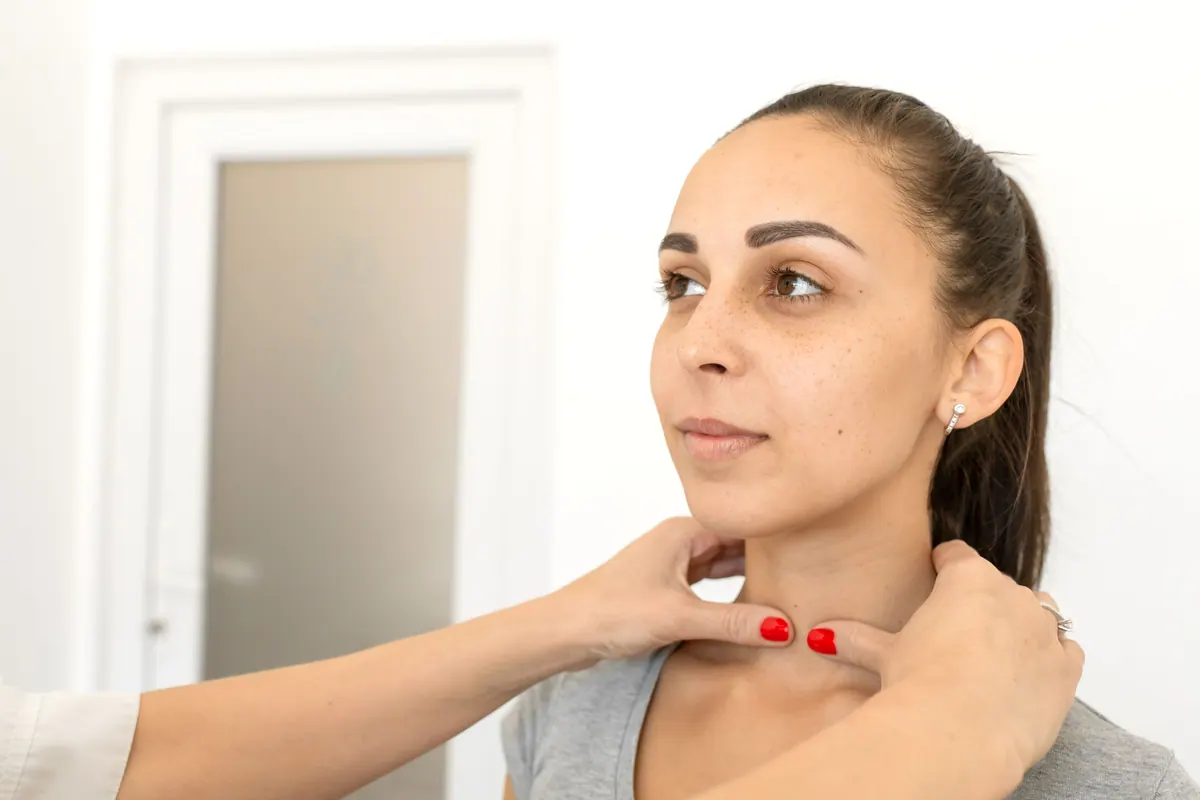
What is Hashimoto’s disease?
Hashimoto’s disease is an autoimmune condition: the immune system makes antibodies against the thyroid, white blood cells pile up inside the gland, and over time the damaged tissue can no longer make enough hormone. NIDDK notes that it also goes by Hashimoto’s thyroiditis, chronic lymphocytic thyroiditis and autoimmune thyroiditis, and that it is the most common cause of an underactive thyroid.
It is 4 to 10 times more common in women than in men and most often appears between ages 30 and 50, although teenagers and young women can develop it too. A family history of thyroid disease is common. NIDDK says genes and viruses such as hepatitis C may play a part, but nobody yet knows why one woman develops it and her neighbor does not.
How does Hashimoto’s progress from antibodies to an underactive thyroid?
Hashimoto’s usually moves in stages over many years, and plenty of women stay in the earliest stage for a long time without a single symptom. The American Thyroid Association describes a slow course in which antibodies can be found well before hormone levels change.
| Stage | What blood tests show | What usually happens |
|---|---|---|
| Antibodies only | Antibodies raised, TSH and free T4 normal | No thyroid hormone needed; TSH is watched |
| Mild (subclinical) | TSH slightly raised, free T4 normal | Medication may or may not start right away |
| Overt hypothyroidism | TSH raised, free T4 low | Daily levothyroxine, dose guided by TSH |
| Rare early flare | Hormone briefly high as damaged cells release it | Short-lived signs of an overactive thyroid |
The ATA says Hashimoto’s can be diagnosed with no symptoms at all, when antibody levels are high and hormone levels normal, and that a TSH check once or twice a year will catch the shift toward an underactive gland. NIDDK adds that the early overactive flare is rare. Once function does fall, the symptoms match those of hypothyroidism in women: fatigue, sensitivity to cold, constipation, dry skin, muscle aches, difficulty exercising and irregular or heavy periods.
Inflammation can also enlarge the gland into a goiter. The ATA describes neck discomfort, pressure or trouble swallowing, and NIDDK describes a feeling of fullness in the throat that is usually painless.
What do thyroid antibodies predict, and what don’t they?
Antibodies tell you why a thyroid problem exists, not how well the gland is working today. NIDDK says most people with Hashimoto’s carry thyroid peroxidase (TPO) antibodies. If they are absent but the disease is still suspected, NIDDK says imaging by ultrasound may be ordered, since the pictures reveal how big the gland is and other signs of Hashimoto’s and can rule out nodules.
What antibodies do predict is risk. In a JAMA review published in 2019, people who had TPO antibodies along with a borderline TSH carried a greater risk of progressing to overt hypothyroidism.
What they do not do is track the disease. The ATA’s guide to thyroid function tests says detecting antibodies helps with the first diagnosis, but following their level over time does not help detect developing hypothyroidism or judge response to treatment; TSH and free T4 do that work. A repeat antibody number, higher or lower, is therefore not what your clinician uses to decide whether you need medicine. How TPO and thyroglobulin antibody results are reported is explained on our page about thyroid antibody tests.
Which other conditions tend to come with Hashimoto’s?
Having one autoimmune condition makes another more likely, and NIDDK lists five that raise the chance of Hashimoto’s:
- Celiac disease, which damages the small intestine
- Lupus
- Rheumatoid arthritis
- Sjögren’s syndrome, with dry eyes and mouth
- Type 1 diabetes
In practice, this means your thyroid diagnosis belongs in the history you give every clinician, and a new autoimmune diagnosis is a reason to make sure your thyroid has been checked.
Leaving the resulting hypothyroidism untreated carries its own risks. NIDDK names high cholesterol, heart disease and heart failure, high blood pressure, problems during pregnancy and, rarely, myxedema.
How is Hashimoto’s treated?
Treatment targets thyroid function, not the antibodies. If your gland still makes enough hormone, NIDDK says your clinician may check your symptoms and levels on a schedule instead of starting anything, and the ATA confirms that high antibodies with normal TSH and free T4 do not need thyroid hormone.
When the thyroid becomes underactive, levothyroxine replaces the T4 it can no longer make. The ATA describes how the dose is matched to your TSH:
- Dose too low, or doses often missed: symptoms persist and TSH stays high.
- Dose too high: signs of an overactive thyroid appear and TSH drops below normal.
- Long term: most women with Hashimoto’s-related hypothyroidism need the medicine for life.
Absorption matters with this disease as with any other cause. According to NIDDK, grapefruit juice, espresso, soy and any multivitamin with iron or calcium in it can blunt absorption, which is why the tablet is often taken in the morning, 30 to 60 minutes ahead of breakfast.
Iodine is the one dietary point with a clear warning. NIDDK explains that people with autoimmune thyroid disease may be sensitive to its harmful effects, so large amounts from kelp, dulse and other seaweed, iodine supplements, some cough syrups and certain iodine-rich medicines may cause an underactive thyroid or make it worse.
When does a Hashimoto’s symptom need prompt care?
Most of Hashimoto’s unfolds slowly, but two situations should not wait. A goiter that makes swallowing difficult or causes steady pressure in the neck needs an exam soon. If neck swelling ever makes it hard to breathe, call 911.
NIDDK describes myxedema as a rare state in which the body slows down so far that it threatens life. Severe confusion, extreme drowsiness or unresponsiveness in someone with long-untreated hypothyroidism is an emergency: call 911.
How we look for Hashimoto’s at our clinic
Antibody testing is built into our standard thyroid panel together with the three hormone measures, so an autoimmune cause is found even when TSH on its own looks fine. If you are trying to work out whether your symptoms come from the thyroid or from something else, our symptom assessment is a quick way to see what to bring up.
When antibodies are positive and function is normal, the plan is a schedule of TSH checks rather than medicine. When the gland has slowed, the provider starts levothyroxine, choosing the dose with your body size, age and cardiac history in mind, and repeats labs six to eight weeks later. Our thyroid care for women program explains how we test and treat, and you can read about all the conditions we write about in one place.
When you want to know which stage you are in, book a consultation. We open with a short free call of about ten minutes, then draw blood the day you come in and go over every result with you, face to face or by video.
